
Types of Coffee Bean Origins: A Flavor Guide

Coffee bean origin is defined as the geographic region, species, and processing background that together create a coffee’s distinct flavor profile. Understanding the types of coffee bean origins is the fastest way to explain why an Ethiopian cup tastes like blueberries while a Brazilian one tastes like chocolate. The two major species, Arabica and Robusta, each carry genetic flavor roots tied to their native regions. Countries like Ethiopia, Colombia, Brazil, Kenya, and Indonesia each produce coffees with recognizable, repeatable flavor signatures. Once you know how origin works, every cup tells you exactly where it came from.
1. What are the main types of coffee bean origins?
Coffee origin is defined at three levels: species, geography, and processing. All three influence what ends up in your cup, including acidity, body, aroma, and sweetness. Geography sets the flavor potential. Processing then modifies that potential, meaning two coffees from the same farm can taste completely different depending on how they were handled after harvest.
The world’s coffee grows within the Coffee Belt, a latitudinal band stretching from roughly 25°N to 30°S around the equator. Countries like Ethiopia, Brazil, Colombia, Kenya, Vietnam, and Indonesia all fall within this belt. The belt’s combination of tropical heat, rainfall, and altitude creates the conditions coffee plants need to thrive.
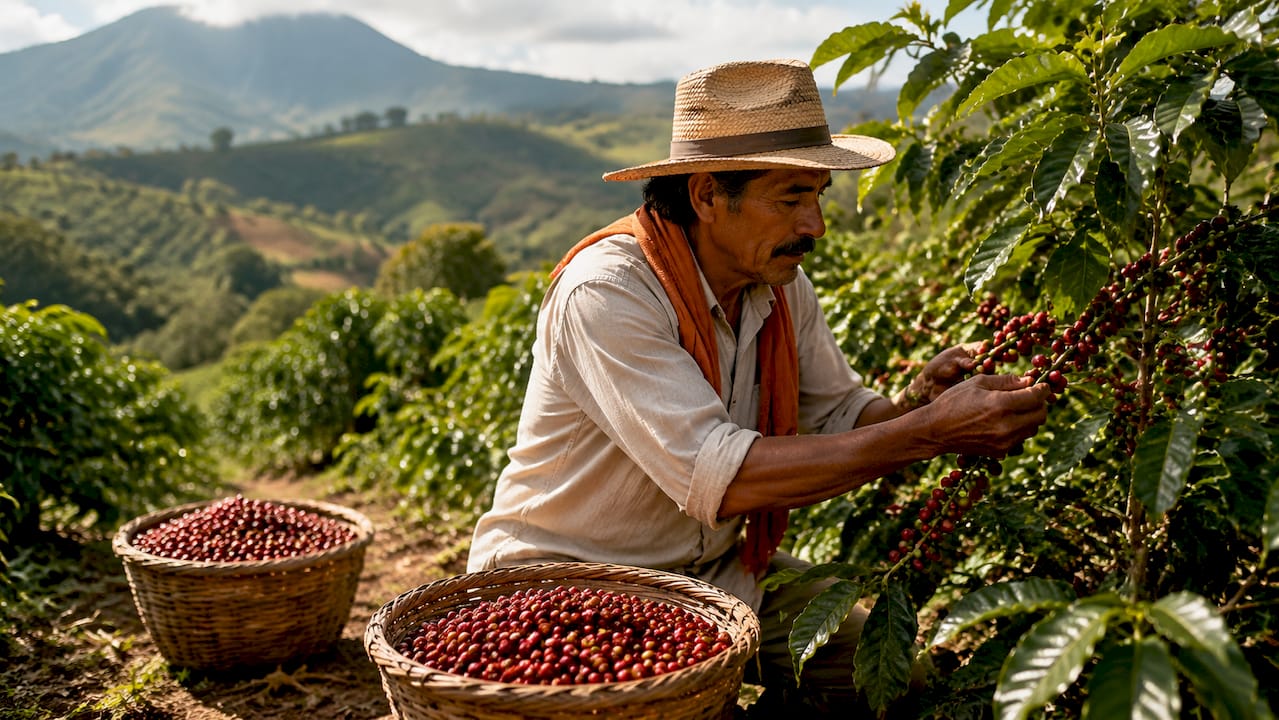
2. Africa: floral, fruity, and bright
African coffees are the most complex and fruit-forward of any growing region. Ethiopia is the genetic birthplace of Arabica coffee, and its beans reflect that heritage with jasmine, bergamot, and berry notes. Kenya produces a wine-like cup with bright acidity, blackcurrant, and sometimes a savory tomato quality that surprises first-time drinkers. Rwanda and Burundi deliver similar brightness with stone fruit and a clean, tea-like finish.
Country-level flavor profiles show Ethiopia and Kenya consistently ranking among the most distinctive origins in the world. That distinctiveness comes from altitude, heirloom varietals, and the region’s rich biodiversity. African coffees reward drinkers who enjoy complexity and brightness over smoothness.
Pro Tip: If you want to understand what “high acidity” means in coffee, start with a washed Ethiopian Yirgacheffe. It’s the clearest example of bright, clean acidity you’ll find.
3. Central and South America: balanced, chocolatey, and smooth
Central and South American coffees are the most widely consumed in the world, and for good reason. Colombia produces a balanced, caramel-forward cup with crisp acidity and a clean finish. Brazil, the world’s largest coffee producer, delivers nutty, chocolatey, and low-acid profiles that work beautifully as espresso bases. Guatemala and Costa Rica sit in the middle, offering medium body with bright fruit notes and a cocoa finish.
The Coffee Belt geography of this region means consistent rainfall and rich volcanic soil. Altitude varies significantly across the region, which is why a Colombian coffee from Huila tastes different from one grown in Nariño. You can read more about how flavor balance works across these profiles.
Pro Tip: Brazilian coffees are often natural-processed, which adds body and sweetness. If you love smooth, low-acid coffee, Brazil is your starting point.
4. Asia-Pacific: earthy, spicy, and full-bodied
Asia-Pacific coffees are the boldest and most polarizing of any region. Indonesia, particularly Sumatra, produces an earthy, herbal, and full-bodied cup with low acidity and a syrupy texture. That profile comes partly from the wet-hulled processing method unique to the region. Vietnam is the world’s largest Robusta producer, and its beans deliver a strong, bitter, and intensely caffeinated cup that forms the backbone of many commercial blends.
India produces both Arabica and Robusta, with its Monsooned Malabar beans offering a uniquely mellow, low-acid profile created by exposing dried beans to monsoon winds. Papua New Guinea and the Philippines are smaller producers but deliver clean, fruity cups that punch above their weight. Asia-Pacific origins suit drinkers who want power and body over brightness.
5. How Arabica vs. Robusta origins shape flavor
Arabica’s accepted genetic origin is Ethiopia, while Robusta is native to western and central Sub-Saharan Africa. Arabica is more highly regarded for its nuanced flavor, lower caffeine, and higher acidity. Robusta contains roughly twice the caffeine of Arabica and produces a harsher, more bitter cup with a thicker crema, which makes it valuable in espresso blends.
The species difference is foundational to understanding why coffee varietals taste different across origins. An Arabica from Colombia and a Robusta from Vietnam are not just different in geography. They are different plants with different chemistry. Arabica and Robusta species differences explain more about flavor diversity than any single growing region can on its own.
6. How processing methods change origin flavor
Processing methods strongly influence flavor, sometimes more than geography alone. Washed coffees are cleaner and brighter, letting the bean’s natural acidity and floral notes come forward. Natural-processed coffees are heavier and fruitier, with a wine-like or jam-like quality from fermenting inside the fruit. Honey-processed coffees sit in between, offering sweetness and body without the full fruit intensity of naturals.
The same Ethiopian farm can produce two completely different cups depending on whether the beans are washed or natural-processed. Processing writes the script for flavor more than origin geography alone in many cases. This is why knowing the processing method is just as important as knowing the country of origin.
- Washed: Clean, bright, high acidity. Best for showcasing floral and citrus notes.
- Natural: Fruity, heavy body, wine-like sweetness. Common in Ethiopia and Brazil.
- Honey: Sweet, medium body, balanced. Popular in Costa Rica and El Salvador.
- Wet-hulled: Earthy, low acid, syrupy. Specific to Indonesia.
Pro Tip: When comparing two origins side by side, use the same roast level and the same processing method. Otherwise, you’re tasting the process, not the place.
7. Notable coffee origins and their flavor signatures
Some origins have flavor profiles so distinct they’ve become reference points for the entire industry.
- Ethiopia: Floral, jasmine, blueberry, bergamot, high acidity. The origin of Arabica itself.
- Kenya: Blackcurrant, tomato, bright acidity, wine-like finish. Grown at high altitude on volcanic soil.
- Brazil: Nutty, milk chocolate, low acidity, smooth body. The world’s top producer by volume.
- Colombia: Caramel, red apple, balanced acidity, clean finish. Consistent and widely loved.
- Sumatra (Indonesia): Earthy, cedar, dark chocolate, full body, low acidity. Wet-hulled processing defines the profile.
- Vietnam: Bold, bitter, high caffeine, Robusta-dominant. The backbone of canned and instant coffee globally.
- Panama Geisha: Intensely floral, jasmine, peach, tea-like. One of the rarest and most expensive coffees in the world.
| Origin | Flavor Notes | Acidity | Body |
|---|---|---|---|
| Ethiopia | Floral, berry, jasmine | High | Light to medium |
| Kenya | Blackcurrant, wine, tomato | High | Medium |
| Brazil | Chocolate, nutty, smooth | Low | Full |
| Colombia | Caramel, red apple, clean | Medium | Medium |
| Sumatra | Earthy, cedar, herbal | Low | Full |
| Panama Geisha | Floral, peach, tea-like | High | Light |
8. How to identify and appreciate coffee origin flavors
Lot-level traceability is the gold standard for understanding what you’re tasting. A bag that lists only “Colombia” tells you less than one that lists the farm, cooperative, harvest date, and processing method. Specialty roasters who provide this information give you a real map to the flavor in your cup. Learning to read those labels is the first step to identifying origin flavors consistently.
Altitude serves as a rough guide to flavor potential. Higher-grown beans tend to develop more slowly, producing denser beans with more acidity and complexity. But altitude alone does not guarantee quality. Microclimate, soil, varietal, and processing all shape the final cup alongside elevation.
To sharpen your palate for regional coffee bean varieties, try these practices:
- Buy single-origin coffees rather than blends when learning. Blends mask individual origin characteristics.
- Compare two origins at the same roast level to isolate geographic flavor differences.
- Use a flavor wheel, like the one published by the Specialty Coffee Association, to put words to what you taste.
- Read the whole bean benefits of grinding fresh, which preserves origin-specific aromatics better than pre-ground coffee.
- Check if your roaster lists origin certification details, which signal farm-level accountability and flavor consistency.
Roast level normalization is critical when comparing origins. A dark roast will overpower the delicate floral notes of an Ethiopian bean. Tasting origins at a light to medium roast gives you the clearest picture of what the geography and processing actually contributed.
Key takeaways
Coffee origin is a combination of geography, species, and processing, and all three must be understood together to accurately identify and appreciate what’s in your cup.
| Point | Details |
|---|---|
| Origin has three layers | Geography, species, and processing all shape flavor. No single factor tells the full story. |
| Africa leads in complexity | Ethiopian and Kenyan coffees deliver the most distinctive floral and fruit-forward profiles. |
| Processing rewrites flavor | A natural-processed bean from Ethiopia tastes dramatically different from a washed bean at the same farm. |
| Arabica vs. Robusta matters | Species differences explain more about flavor diversity than geography alone in many cases. |
| Traceability builds trust | Lot-level data (farm, harvest date, process) gives you a reliable map to what you’re tasting. |
Why origin is the most exciting thing about coffee
I’ve tasted coffees from dozens of countries, and the one thing that never gets old is how much a single cup can tell you about a place. A Yirgacheffe from Ethiopia doesn’t just taste good. It tastes like somewhere specific, somewhere with altitude and heirloom trees and a particular way of washing the fruit off the bean. That specificity is what separates coffee from almost every other beverage.
The biggest misconception I see among new coffee drinkers is assuming that “strong” means good and that origin is just marketing. It’s not. A Sumatran coffee is earthy and full-bodied because of wet-hulling, not because it’s “stronger.” A Kenyan coffee tastes like blackcurrant because of the SL28 varietal and volcanic soil, not because of clever branding. Once you understand that, you stop buying coffee by price and start buying it by curiosity.
My honest suggestion for anyone starting out: buy a washed Ethiopian and a natural Brazilian in the same week. Brew them the same way. The difference will be so clear that you’ll never look at a coffee bag the same way again. That’s the moment origin stops being a label and starts being a language.
— Tony
Coffee from the origins you’ll actually remember
The Flaming Bean sources coffees from recognized growing regions and roasts them to highlight what makes each origin worth drinking.
Whether you want something smooth and approachable or bold and complex, The Flaming Bean has a roast for it. The Evening Roast is a great starting point for drinkers who want a clean, balanced cup that lets origin character come through without intensity. For something with more depth, the Signature Blends collection combines beans from multiple origins to create layered, memorable flavor. If bold is what you’re after, the bold coffee lineup delivers full-bodied, high-impact cups from distinctive origins. Every bag comes with origin and roast details so you always know what you’re drinking.
FAQ
What are the main types of coffee growing regions?
The main coffee growing regions are Africa, Central and South America, and Asia-Pacific. Each region produces coffees with distinct flavor profiles shaped by altitude, climate, soil, and processing methods.
Why do coffee varietals taste different from each other?
Coffee varietals taste different because of genetic differences between plants, growing altitude, soil composition, and processing method. A washed Arabica from Kenya and a natural Robusta from Vietnam share almost no flavor characteristics despite both being coffee.
How do I identify coffee origin flavors when tasting?
Buy single-origin coffees and compare them at the same roast level. Use a flavor wheel to name what you detect, and look for bags that list farm, harvest date, and processing method for the clearest origin picture.
What is the Coffee Belt?
The Coffee Belt is a latitudinal band around the equator, roughly between 25°N and 30°S, where climate conditions support commercial coffee cultivation. Countries like Ethiopia, Brazil, Colombia, and Indonesia all fall within it.
Does altitude affect coffee flavor?
Higher altitude generally produces denser beans with more acidity and complexity, but altitude alone does not guarantee quality. Microclimate, varietal, and processing all shape the final cup alongside elevation.
Comments