
What Is a Coffee Blend? Your Complete Flavor Guide

A coffee blend is a mixture of two or more beans from different origins, varieties, or processes combined to achieve a consistent, balanced flavor profile. Unlike a single-origin coffee, which highlights the character of one specific farm or region, a blend is engineered to deliver something greater than any single component can offer on its own. Think of The Flaming Bean’s Evening Roast or Abyssal: each one is a deliberate combination of beans chosen to hit specific notes of body, sweetness, and aroma. Understanding what goes into a blend helps you choose better, brew better, and enjoy every cup more.
What is a coffee blend vs. single-origin coffee?
Single-origin coffees come from one defined location, whether that is a single farm, cooperative, or region. They are prized for terroir expression, meaning the flavor reflects the soil, altitude, and climate of that specific place. A Yirgacheffe from Ethiopia tastes like Ethiopia. A Huila from Colombia tastes like Huila. That specificity is the whole point.
Blends work differently. A coffee blend combines beans from multiple origins to create complexity and consistency that single-origin coffees cannot reliably provide. Seasonal harvests shift flavor from year to year, but a well-built blend stays the same because the roaster adjusts component ratios to compensate. That consistency is a real advantage for everyday drinkers who want the same great cup every morning.
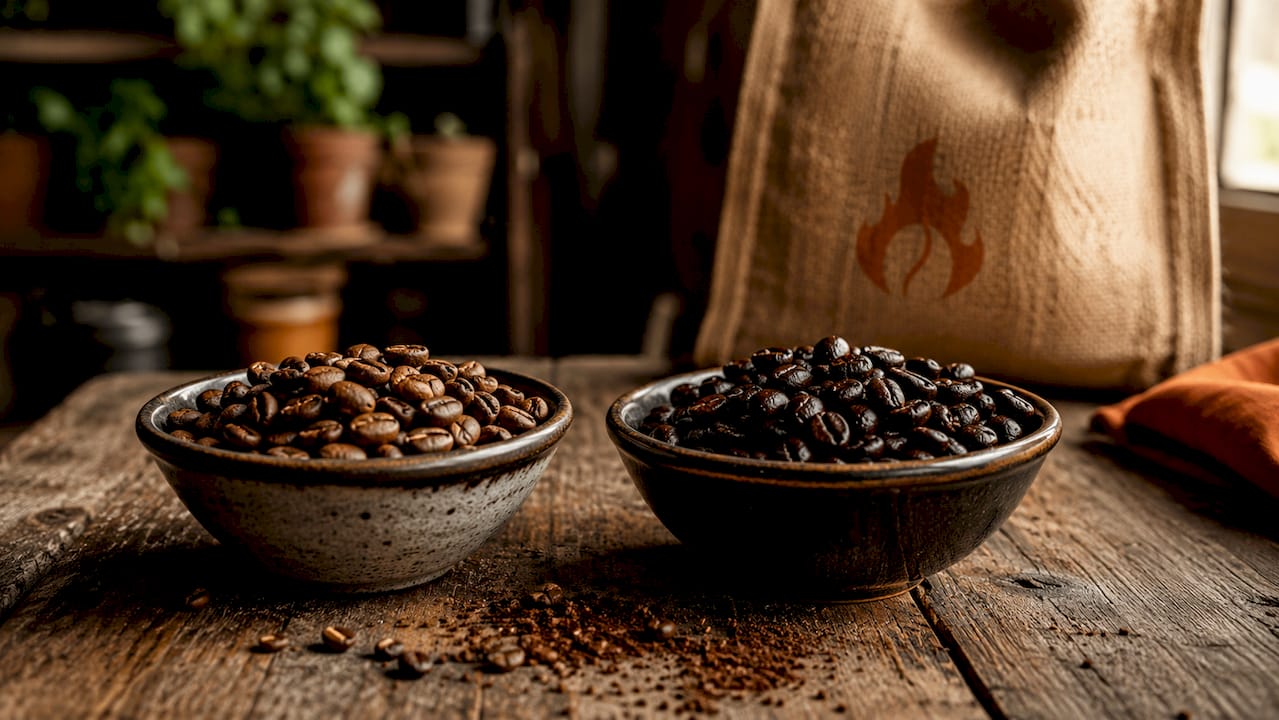
Here is a direct comparison to make the difference clear:
| Factor | Single-Origin | Coffee Blend |
|---|---|---|
| Flavor focus | Terroir and traceability | Balance and complexity |
| Consistency | Varies by harvest season | Maintained across batches |
| Sourcing | One farm or region | Multiple origins or farms |
| Best for | Tasting unique regional notes | Everyday drinking and espresso |
| Flavor range | Narrow and specific | Broad and layered |
Neither option is better in absolute terms. Single-origin coffees reward curiosity and exploration. Blends reward reliability and depth. If you want to taste what a Kenyan AA or a Guatemalan Antigua does on its own, go single-origin. If you want a cup that delivers the same satisfying balance every time, a blend is your answer.
Pro Tip: Try a side-by-side tasting of a single-origin and a blend made with the same base bean. The difference in complexity and consistency will tell you more than any description can.
What are the common types of coffee blends?
Blends are not all built the same way. Roasters design them with specific flavor goals in mind, and those goals determine everything from bean selection to roast level.
The most common types include:
- House blends. These are a roaster’s everyday offering, built for broad appeal. They balance acidity, body, and sweetness to please the widest range of palates. The Flaming Bean’s Safe Ground is a good example of a blend designed for wide, everyday enjoyment.
- Espresso blends. These are formulated to perform under pressure. They tend toward lower acidity, higher body, and a sweetness that cuts through milk in lattes and cappuccinos. Understanding espresso roast characteristics helps you pick the right blend for your machine.
- Regional blends. These combine beans from neighboring growing areas, like Central and South America, to highlight shared flavor characteristics while adding complexity.
- Purpose blends. These are built around a mission beyond flavor. The Flaming Bean’s Mission Fuel and Liquid Liberation are purpose blends: exceptional coffee that also supports specific causes and communities.
Each blend style targets a different combination of the four core flavor attributes: acidity, body, aroma, and sweetness. A two or three component blend is the standard framework. One bean anchors the body and base flavor. A second adds brightness or acidity. A third, when used, fine-tunes sweetness or aroma. Every component serves a specific purpose.
Pro Tip: When reading a blend’s tasting notes, look for at least three distinct descriptors. If you see only one or two, the blend may lack the complexity that makes it worth reaching for every day.
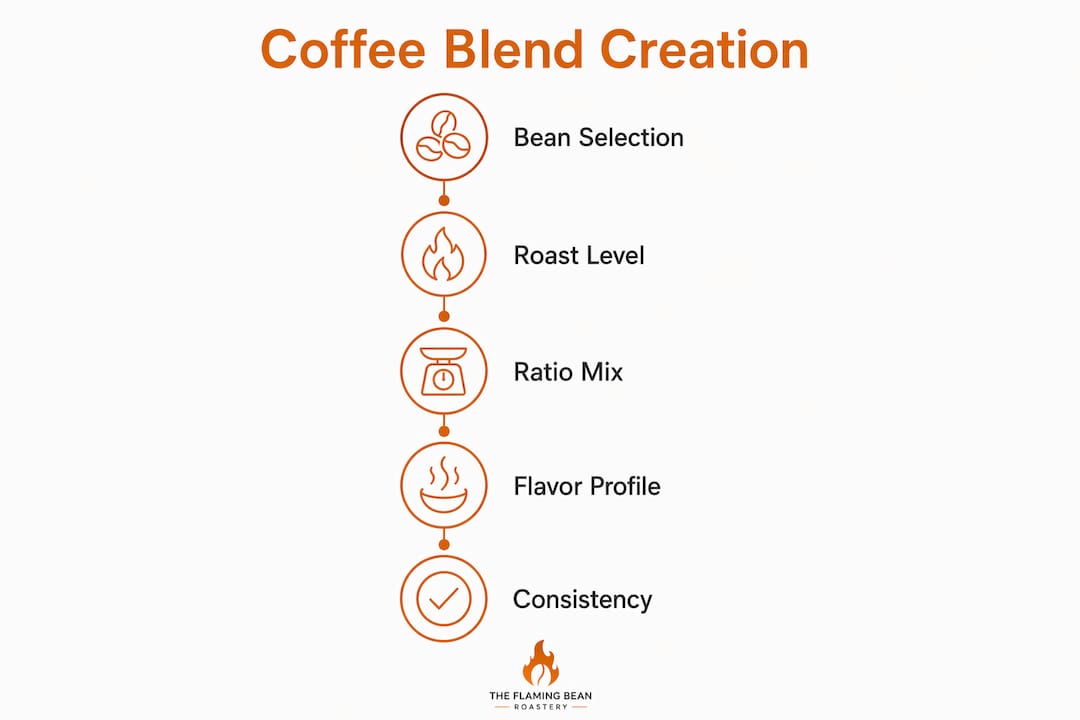
How are coffee blends created?
The process behind custom coffee blend creation is more deliberate than most people realize. A common misconception is that all beans in a blend are simply thrown together and roasted at once. In reality, roasting each component separately to its optimal profile before combining is the approach skilled roasters use to preserve distinct flavor notes.
There are two primary methods:
- Pre-roast blending. Green beans are mixed before they go into the roaster. This is faster and more cost-effective, but it means every bean gets the same roast treatment. If two beans have different densities or moisture levels, one will be over-roasted while the other is under-roasted.
- Post-roast blending. Each bean is roasted separately to its ideal profile, then combined. This method preserves brightness in one bean and caramel notes in another, giving the roaster precise control over the final cup.
A third approach sits between the two. A hybrid blending method pre-blends beans with similar roasting characteristics, then adds a separately roasted component to tune the final flavor. This balances efficiency with control and is common among experienced roasters.
“Blending allows you to compensate for weaknesses in individual coffees by combining their strengths. One coffee’s acidity can balance another’s flatness, creating a complex and balanced cup.” — Green Coffee Collective
Roast level matters just as much as bean selection. A darker roast on one component adds body and chocolate notes. A lighter roast on another preserves fruit and brightness. Understanding roast levels and their flavor impact is a core skill for anyone serious about blending. The Flaming Bean applies this thinking to every roast in its lineup, from the bold Angry Rooster to the smooth Evening Roast.
Pro Tip: When experimenting with home blending, keep a simple notebook. Record the beans, ratios, and roast levels for each batch. Small adjustments become much easier to track and repeat when you have written notes.
How to choose or create the right coffee blend
Choosing a blend depends on three things: your flavor preferences, your brewing method, and the occasion. A blend that shines in a French press may fall flat as an espresso. Getting this right saves money and frustration.
Here is a practical framework for matching blends to occasions:
| Occasion | Flavor Goal | What to Look For |
|---|---|---|
| Morning boost | Bold body, low acidity | Dark roast blend, high body |
| Espresso drinks | Sweetness, crema, low acidity | Espresso blend, medium-dark roast |
| Afternoon drip | Balanced, approachable | House blend, medium roast |
| Evening cup | Smooth, low caffeine | Light to medium roast, low bitterness |
If you want to create a custom coffee blend at home, the custom coffee blend development steps are straightforward:
- Start with two beans. Pick one for body and one for brightness or sweetness.
- Begin with a 70/30 ratio. Taste it. Adjust toward the bean you want to feature more.
- Brew the same ratio three ways: drip, French press, and pour-over. Each method will reveal different aspects of the blend.
- Once you find a ratio you like, experiment with ratios and keep notes on every batch.
- Source beans from reputable roasters who provide detailed tasting notes and origin information. Top custom coffee blend suppliers like The Flaming Bean offer single-origin components and signature blends that give you a strong starting point.
Understanding what balance means in coffee is the single most useful concept for home blenders. Balance does not mean bland. It means no one flavor dominates to the point of distraction. A well-balanced blend lets you taste acidity, sweetness, and body in sequence rather than all at once.
Key Takeaways
A coffee blend is the most reliable way to achieve consistent, complex flavor across every brewing method and every season.
| Point | Details |
|---|---|
| Core definition | A blend mixes two or more beans from different origins to create balance and consistency. |
| Blend vs. single-origin | Single-origin highlights terroir; blends prioritize complexity and batch-to-batch consistency. |
| Roasting method matters | Post-roast blending preserves distinct flavor notes better than pre-roast blending. |
| Match blend to occasion | Choose body and roast level based on brew method, time of day, and flavor preference. |
| Home blending basics | Start with two beans at a 70/30 ratio, taste, adjust, and keep written notes on every batch. |
Why blends deserve more credit than they get
Most coffee conversations celebrate single-origin. The farm, the altitude, the processing method. That is all worth celebrating. But I have spent enough time tasting and working with coffee to say clearly: blends are where the real craft lives.
Building a blend that holds up across seasons, across brew methods, and across palates is genuinely hard. It requires knowing not just what each bean tastes like on its own, but how it behaves when it shares a roaster drum or a grinder with something else. The Flaming Bean’s purpose blends like Safe Ground and Mission Fuel show what happens when that craft is paired with intention. You get a cup that tastes great and means something.
My honest advice: do not skip blends because they seem less exotic. Try a well-built house blend from a roaster you trust. Brew it three different ways. You will find more complexity than you expected, and you will start to understand why commercial roasters have been perfecting this craft for generations.
Explore The Flaming Bean’s signature blends
Ready to taste what a well-crafted blend can do? The Flaming Bean has built a full lineup of signature blends designed for every moment of your day.
Whether you want something bold to start your morning or something smooth to wind down at night, there is a blend for you. The Evening Roast is a great starting point if you want a low-bitterness, approachable cup that works beautifully as a drip or pour-over. If you prefer something with more intensity, the bold coffee range delivers serious body and depth. Every blend is roasted with care, sourced from quality growing regions, and built to give you the same great cup every single time.
FAQ
What is a coffee blend made of?
A coffee blend is made of two or more beans from different origins, varieties, or processing methods combined to achieve a specific flavor profile. Each component serves a purpose, such as adding body, sweetness, or acidity.
How does a coffee blend differ from single-origin coffee?
A single-origin coffee comes from one defined location and highlights that region’s unique character. A blend combines beans from multiple origins to create complexity and consistent flavor across batches.
What does a purpose blend coffee mean?
A purpose blend is a coffee designed not only for flavor but also to support a specific cause or mission. The Flaming Bean’s Safe Ground and Mission Fuel are purpose blends that fund organizations working on community protection and digital safety.
What is the best coffee blend for espresso?
The best espresso blend has low acidity, high body, and natural sweetness that holds up under pressure and cuts through milk. Medium-dark roast blends with a base of Brazilian or Colombian beans are the most common choice.
Can you create a custom coffee blend at home?
Yes. Start with two beans at a 70/30 ratio, brew them together, taste the result, and adjust. Systematic note-keeping across small batches is the fastest way to refine a blend you will want to make again.
Recommended
- Coffee Roast Levels Explained: Your Flavor Guide – The Flaming Bean Roastery
- What Does Balance Mean in Coffee? A Flavor Guide – The Flaming Bean Roastery
- Coffee Certification Explained: A Complete 2026 Guide – The Flaming Bean Roastery
- What Is Espresso Roast? Flavor, Brew & Buying Tips – The Flaming Bean Roastery
Comments