
Design Coffee Brand Packaging: A Roaster's 2026 Guide

Great coffee packaging does three things at once: it preserves freshness by blocking oxygen, light, and moisture while releasing CO2 through a degassing valve; it communicates roast level, origin, and brand story at a glance; and it meets U.S. labeling requirements so it can ship and sell without a hitch. Hand your supplier this spec to start: one-way degassing valve + high-barrier multilayer laminate (or mono-PE with EVOH/SiOx) + resealable zipper + printable front and back panels.
Quick brief to copy into your supplier email:
- One-way degassing valve (placement: back or bottom panel)
- High-barrier multilayer film OR mono-PE with EVOH or SiOx coating
- Resealable zipper closure
- Matte or soft-touch finish (specify Pantone references)
- Front panel: brand mark, product name, roast level, net weight
- Back panel: origin, processing, tasting notes, certifications, contact info
Table of Contents
- What technical components actually keep your coffee fresh?
- Which packaging format fits your channel?
- What must appear on a U.S. coffee label?
- How do you prepare print-ready artwork for a coffee bag?
- How do you balance sustainability with barrier performance?
- What do wholesale and private-label buyers need to know about packaging?
- What does packaging actually cost, and how long does it take?
- How do you brief a packaging supplier effectively?
- How do you tell your brand story through packaging design?
- Key Takeaways
- Packaging is where your coffee makes its first impression
- The Flaming Bean makes private-label and wholesale packaging straightforward
- Useful sources and further reading
What technical components actually keep your coffee fresh?
2026 industry standards identify degassing valves and high-barrier multilayer materials as non-negotiable for specialty beans. Here is what each element does and what to specify.
Degassing valves let CO2 escape after roasting without letting oxygen in. Without one, freshly roasted beans will bloat and rupture a sealed bag. Specify a back-panel placement and confirm the valve is rated for the expected shelf life (typically 6–12 months for whole bean).
Barrier films are where most of the trade-off decisions live. Traditional multilayer laminates with foil or metallized film layers deliver the strongest protection against oxygen, moisture, and light, as explained in our try new beverage flavors guide. Mono-material PE with EVOH or SiOx coatings can hit comparable shelf-life targets while qualifying as recyclable, which matters if sustainability is part of your brand story.
Sealing and closures matter more than most roasters expect. Request the oxygen transmission rate (OTR) and water vapor transmission rate (WVTR) from your supplier in writing. Heat-seal integrity should be tested at the fill temperature your co-packer uses. Resealable zippers extend usable life after opening, which consumers notice.
Pro Tip: When sending an RFQ, ask every supplier to quote OTR and WVTR values alongside price. Suppliers who cannot provide barrier data are not equipped for specialty coffee.
Which packaging format fits your channel?
Common 2026 formats cover a wide range of use cases, from premium retail to high-volume wholesale. Choosing the wrong format costs you shelf presence, shipping efficiency, or both.
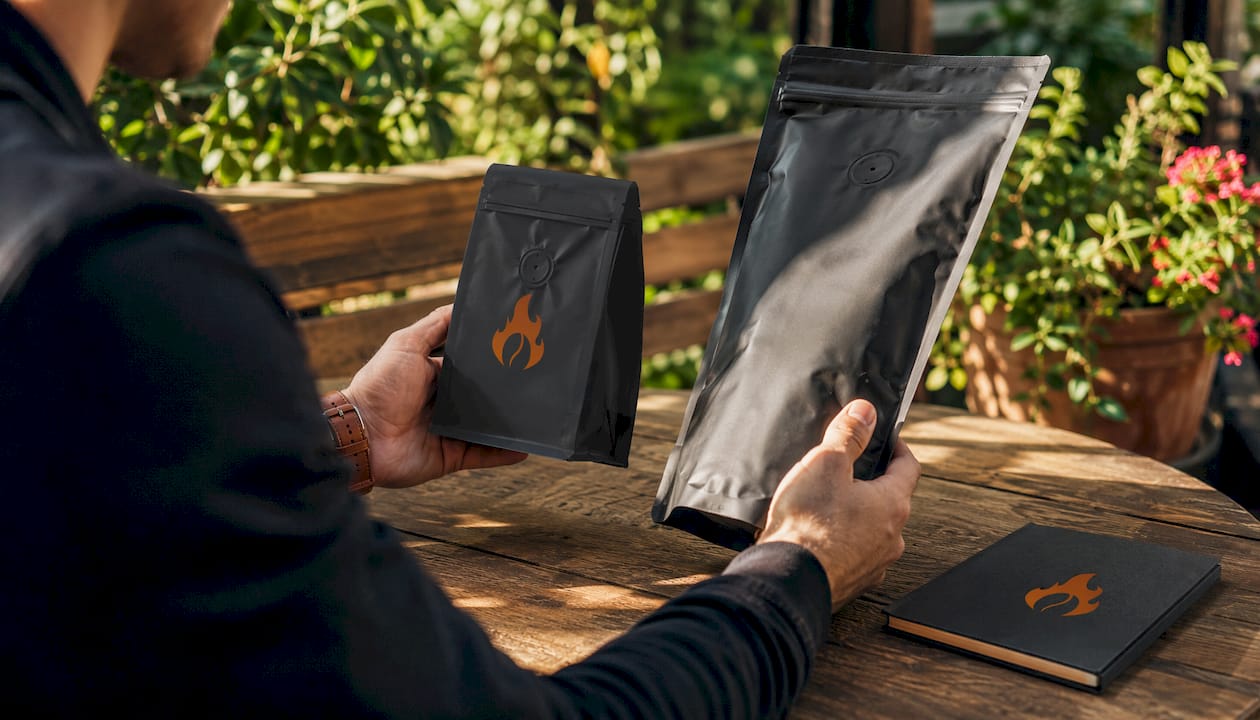
| Format | Best for | Key advantage | Watch out for |
|---|---|---|---|
| Flat-bottom (block-bottom) bag | Retail shelf, premium DTC | Stands upright, wide printable front | Higher per-unit cost, larger MOQ |
| Stand-up pouch | Subscription, mid-tier retail | Cost-efficient, strong shelf appeal | Less premium feel than flat-bottom |
| Gusseted/side-gusset bag | Wholesale bulk (1–5 lb) | High fill volume, ships flat | Limited front-panel real estate |
| Flat pouch | Samples, single-serve gifts | Low cost, easy to mail | No reseal; short shelf life |
| Single-serve portion pack | Subscription add-ons, trial | Lowers first-purchase friction | Higher per-oz cost |
| Tube or jar | Premium gift sets | Strong tactile premium signal | Heavier, higher shipping cost |
A practical move for roasters rotating origins frequently: use a single brand bag with variable labels for each origin run. You reduce obsolete inventory and swap origins without reprinting the whole bag.
What must appear on a U.S. coffee label?
Specialty roasters in 2026 treat the following as standard. Wholesale buyers use this list to verify compliance before placing orders.
Required or strongly expected items:
- Brand name and product name
- Roast level (light, medium, dark)
- Net weight in ounces and grams
- Roast date or roast week
- Country or region of origin
- Processing method (washed, natural, honey)
- Ingredient statement (“100% Arabica coffee” or equivalent)
- Distributor or contact information
Helpful extras for specialty buyers:
- Tasting notes and cupping score
- Altitude, farm or cooperative, producer name, lot number
- Brewing recommendations
- Certifications: USDA Organic, Fair Trade, Rainforest Alliance (see our coffee certification guide for display rules)
FDA note: Coffee sold in the U.S. must comply with FDA food labeling regulations under 21 CFR Part 101, and all packaging materials in contact with the product must be FDA-approved food-contact materials. Always request a food-contact compliance statement from your packaging supplier before approving a material.
How do you prepare print-ready artwork for a coffee bag?
Getting files right before you send them saves weeks of back-and-forth. Follow this sequence:
- Request the dieline first. Ask your supplier for the exact dieline in AI or EPS format before any design work starts. Confirm bleed (typically 3–5 mm), safe zone, and non-print areas (valve, zipper, heat-seal zones).
- Set up color correctly. Work in CMYK for process printing. If your brand color requires exact matching, specify a Pantone (PMS) reference. Avoid RGB files — they shift unpredictably in print.
- Prepare raster images at 300 dpi minimum. Logos and icons must be vector (AI or EPS). Outline all fonts before sending.
- Mark non-print areas on the dieline. Valves, zippers, and windows must be clearly flagged so the printer does not place critical text there.
- Specify your finish. Matte, soft-touch, and gloss each affect perceived quality differently. Soft-touch laminate reads as premium; gloss is cost-efficient and vivid. Note the finish on every file you send.
- Export as PDF/X-1a for final print submission. Confirm with your printer that this is their preferred format.
AI-enabled design tools can speed up concept-to-proof cycles, but always run the final file through a human prepress check before approving.
| Output type | File format | Resolution | Color mode |
|---|---|---|---|
| Logos and icons | AI, EPS, SVG | Vector | CMYK + Pantone |
| Photography | TIFF, PSD | 300 dpi minimum | CMYK |
| Final print file | PDF/X-1a | Embedded | CMYK |
| Mockup/proof | PDF, JPEG | 150 dpi minimum | CMYK |
How do you balance sustainability with barrier performance?
This is the honest trade-off: multilayer laminates with foil give you the best barrier performance, but they are not recyclable through standard U.S. curbside programs. Mono-material PE structures with EVOH or SiOx improve recyclability, though barrier performance can vary by supplier and coating thickness.
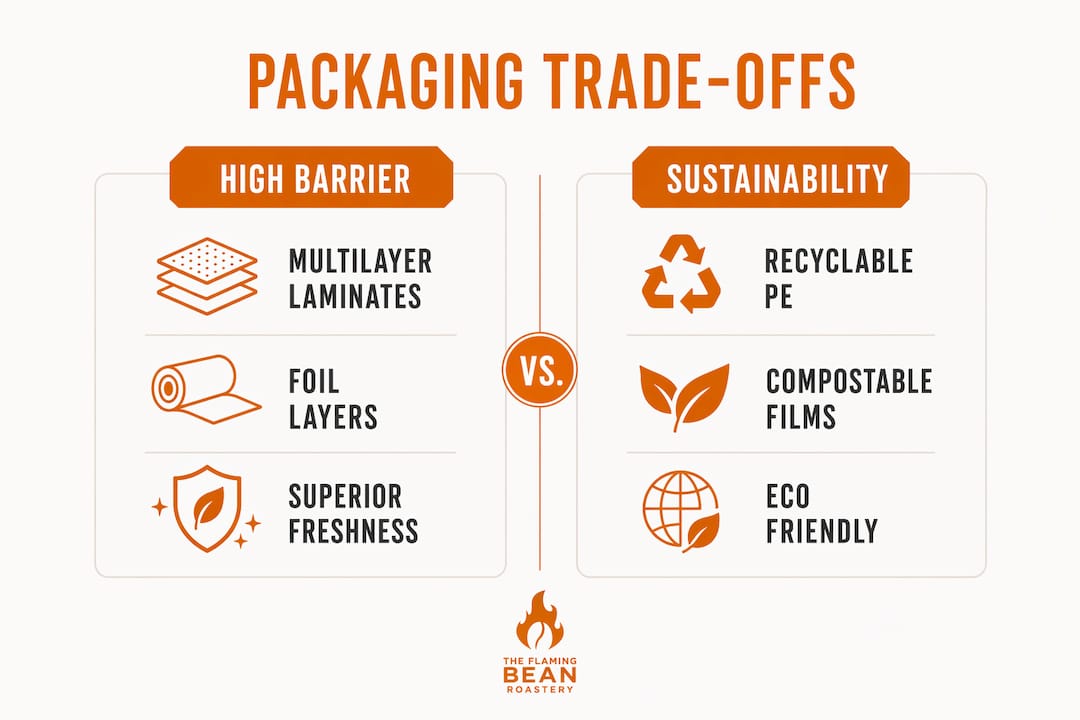
Many roasters in 2026 choose recyclable PE as a practical middle ground while fully compostable barrier films catch up commercially. Compostable options work well for short distribution windows and local composting infrastructure, but they currently fall short for specialty beans targeting 9–12 month shelf life.
Pro Tip: If you commit to a recyclable mono-material structure, add a clear disposal instruction on-pack (“Please recycle empty bag”) and reference the How2Recycle label program, which gives U.S. consumers a recognizable recycling signal.
Practical sustainability checklist:
- Confirm recyclability claim with supplier documentation, not just marketing language
- Specify mono-PE with EVOH or SiOx if recyclability is a brand priority
- Use secondary packaging (corrugated shipper) to compensate for any barrier reduction
- Communicate material choices on-pack; consumers respond to transparency about purpose-driven decisions
What do wholesale and private-label buyers need to know about packaging?
Private-label packaging decisions affect inventory risk, lead times, and resale compliance. Work through these steps before placing an order.
- Confirm MOQ by format. Flat-bottom bags typically carry higher MOQs than stand-up pouches. Gusseted bags for bulk wholesale often have the lowest per-unit cost at volume.
- Choose your labeling approach. A universal brand bag with variable pressure-sensitive labels is flexible and reduces obsolescence risk. Full custom-printed runs deliver a cleaner look but require longer lead times and higher upfront cost.
- Request sample approval before full production. Approve a physical sample, not just a digital proof. Check seals, valve function, zipper action, and print registration.
- Define QA terms in your purchase order. Specify acceptable defect rates, retention sample requirements, and rework policies in writing before production starts.
For more on positioning your private-label line, see how to differentiate your private label coffee brand.
What does packaging actually cost, and how long does it take?
Major cost drivers: format complexity, number of print colors and finishes, barrier material grade, valve addition, MOQ, and any custom tooling (embossing, special windows).
| Phase | Typical duration |
|---|---|
| Concept and dieline request | 1–2 weeks |
| Sample/prototype production | 2–4 weeks |
| Client approval rounds | 1–2 weeks |
| Full production run | 3–6 weeks |
| Shipping (sea freight) | 3–5 weeks |
Production checklist before launch:
- Printed proofs approved (color, text, barcode)
- Physical sample cupped for seal integrity and freshness
- Shelf mockup reviewed for visual hierarchy
- UPC/barcode assigned and tested
- Transit testing completed (drop test, compression)
How do you brief a packaging supplier effectively?
Good briefs get faster quotes and fewer surprises. Include these points in every RFQ.
Supplier questions to ask:
- What are your MOQs by format and print method?
- Can you provide OTR and WVTR data for each material option?
- What valve types and placements do you support?
- What is your standard proof and sample timeline?
- Do you offer food-contact compliance documentation?
What to include in your brief:
- Intended channel (retail shelf, subscription, wholesale, gift)
- Expected shelf life target
- Desired finishes (matte, soft-touch, gloss, emboss)
- Label placement and required certifications
- Target retail price range (helps suppliers suggest appropriate material tiers)
- Quantity range for first order and anticipated reorder frequency
How do you tell your brand story through packaging design?
Packaging that aligns visual design with authentic brand values builds repeat customers. Packaging that prioritizes visual novelty without a clear story does not.
Think of the front panel as a three-second pitch: brand mark at the top, product name large and readable, roast level immediately visible. Everything else belongs on the back. Tactile finishes like soft-touch laminate and embossing signal premium quality before a customer reads a single word.
Dos and don’ts:
- Do use contrast and scale to establish hierarchy (brand mark, product name, roast level in descending size)
- Do match finish to tier: soft-touch or matte for premium, gloss for value-priced lines
- Do use the back panel for tasting notes, origin story, brewing guide, and certifications
- Don’t add a transparent window unless you accept a shorter targeted shelf life (windows reduce barrier performance)
- Don’t sacrifice readability for decoration; a cluttered front panel loses shoppers in seconds
For real-world examples of how brand story translates to pack design, see custom coffee branding examples for entrepreneurs.
Key Takeaways
Effective coffee packaging requires a degassing valve, a high-barrier film structure, a resealable closure, a compliant U.S. label, and a supplier who can provide barrier data in writing.
| Point | Details |
|---|---|
| Valve and barrier are mandatory | Specify a one-way degassing valve and request OTR/WVTR data from every supplier before quoting. |
| Format drives cost and channel fit | Flat-bottom bags suit premium retail; stand-up pouches work for subscriptions; gusseted bags serve wholesale bulk. |
| U.S. label checklist | Include brand name, roast level, net weight, roast date, origin, processing method, ingredient statement, and contact info. |
| Sustainability requires documentation | Recyclable mono-PE with EVOH or SiOx is the practical 2026 choice; always get supplier documentation to back any recyclability claim. |
| The Flaming Bean | Offers private-label, wholesale, and subscription-ready packaging across blends like Evening Roast and Safe Ground. |
Packaging is where your coffee makes its first impression
Most roasters spend months perfecting a roast profile and then hand packaging decisions to whoever quotes fastest. That is the wrong order of operations. Packaging is a freshness system first and a brand statement second, and the two are not in conflict. A bag that fails on barrier performance will stale your coffee before it reaches the customer, no matter how beautiful the label is.
What gets underestimated consistently is the back panel. Wholesale buyers and serious enthusiasts read it. They want origin, processing method, cupping notes, and certifications. A back panel that just repeats the brand name is a missed opportunity to close a repeat purchase. The front sells the vibe; the back validates the decision.
The other thing worth saying plainly: sustainability claims without supplier documentation are a liability, not a selling point. If your bag is “recyclable,” you need a material spec sheet and a compliance statement to back it up. Consumers and retail buyers are asking for that paperwork more often now.
The Flaming Bean makes private-label and wholesale packaging straightforward
We know how much goes into getting packaging right, and we have done the work across our own lineup. Whether you are looking for a subscription-ready format, a wholesale program for your organization, or a private-label blend that carries your name and supports a cause, The Flaming Bean has options built for exactly that.
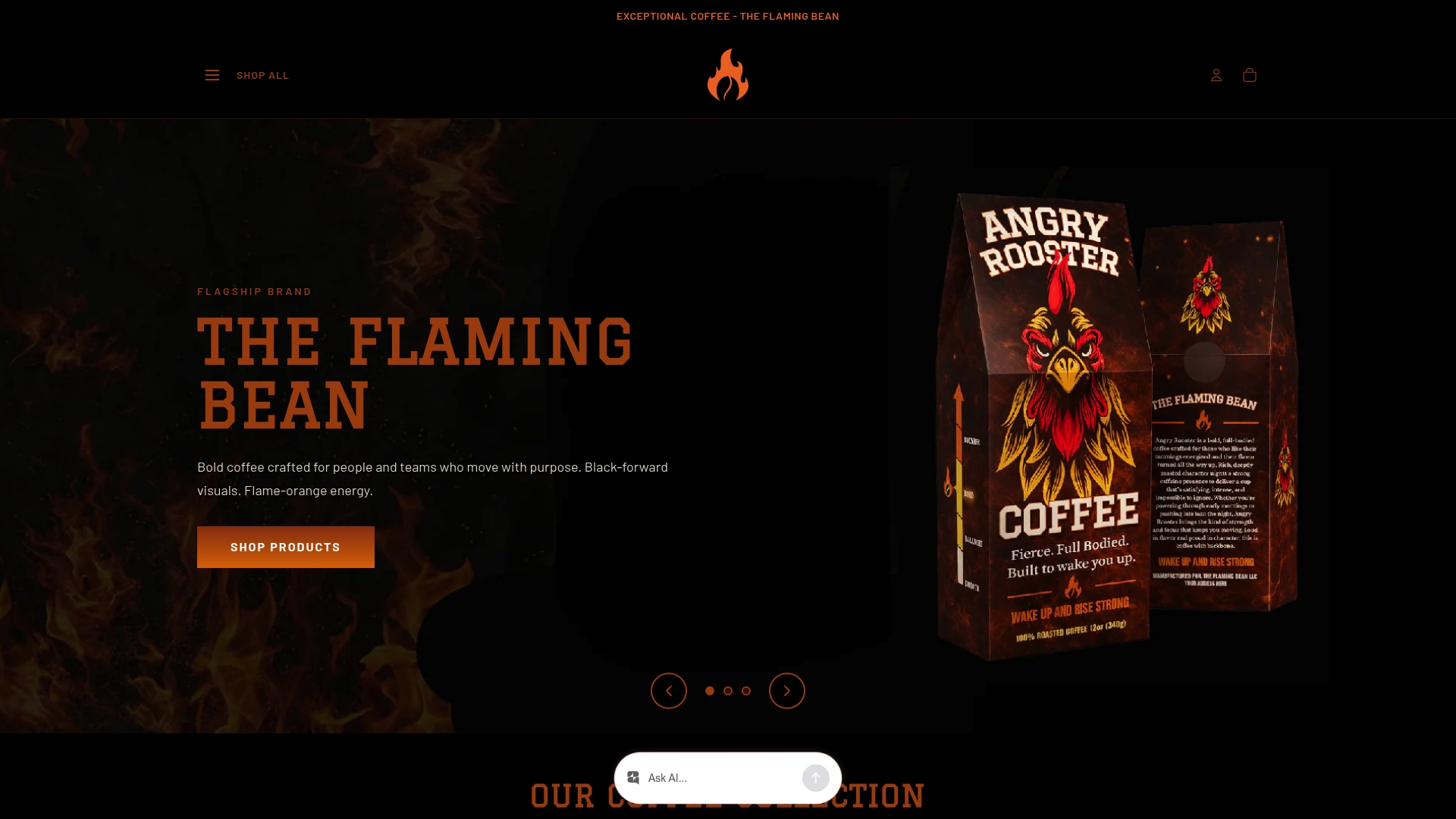
Our Evening Roast is a great example of approachable, subscription-friendly packaging done right. And if you want a blend with a mission behind it, Safe Ground shows how purpose-driven storytelling works on-pack. Browse our signature blends collection to see the full range, or reach out directly to talk through wholesale and private-label options. We are happy to walk you through formats, MOQs, and label requirements so you can move from brief to bag without the guesswork.
Useful sources and further reading
- Savor Brands: Climate change and coffee packaging (2026) — covers 2026 standards for degassing valves and high-barrier materials.
- Bellwether Coffee: The roaster’s guide to coffee packaging — practical label checklist and design guidance for specialty roasters.
- Zenpack: The ultimate coffee packaging design guide — mono-material options, operational tips, and variable-label strategies.
- Leo Print: Compostable vs. recyclable packaging (2026) — honest comparison of compostable and recyclable structures for coffee.
- Perfect Daily Grind: How to design exceptional coffee packaging — brand story alignment and visual hierarchy principles.
- MTPak Coffee: How to design coffee packaging in 2026 — tactile trends and single-serve format guidance.
- FDA Food Labeling Requirements (21 CFR Part 101) — primary U.S. source for food label compliance; verify current requirements directly with FDA before finalizing any label.
- Request barrier testing data (OTR and WVTR) and food-contact compliance statements from every supplier before approving materials for production.
Recommended
- Examples of Custom Coffee Branding for Entrepreneurs – The Flaming Bean Roastery
- How to Choose a White Label Coffee Roaster in 2026 – The Flaming Bean Roastery
- What Does Co-Roasting Mean for Coffee Brands? – The Flaming Bean Roastery
- What Is a Retail Coffee Brand Launch? Your 2026 Guide – The Flaming Bean Roastery
Comments