
How to Differentiate Your Private Label Coffee Brand

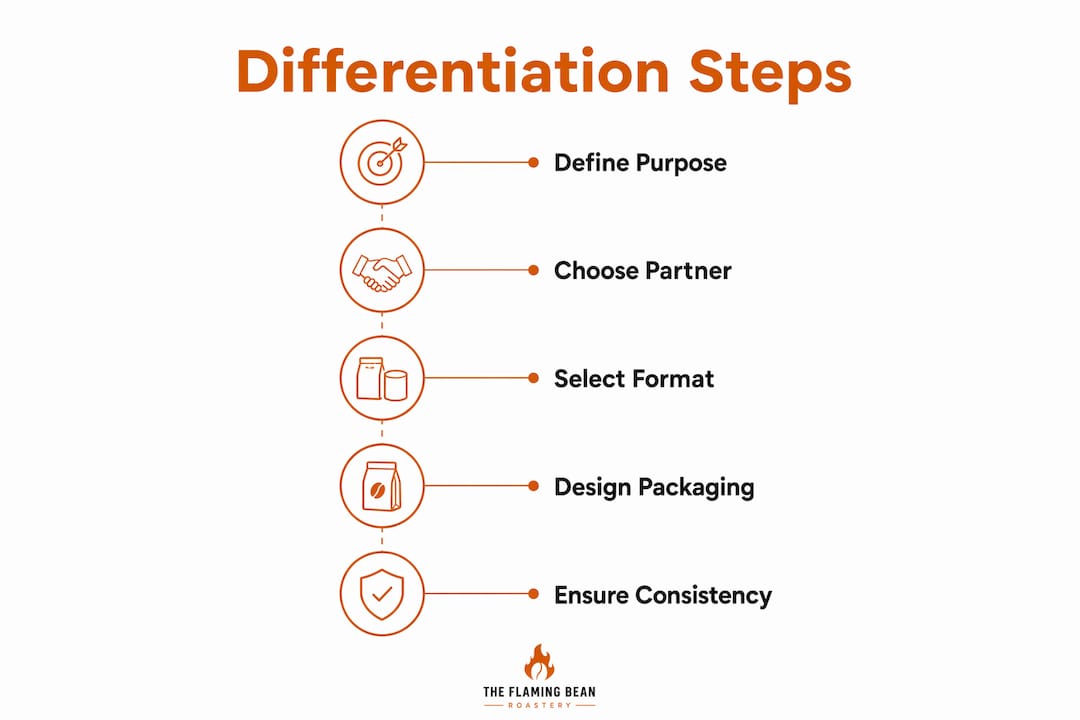
The most effective way to differentiate a private label coffee brand is to build everything around a clear purpose, then back it up with consistent quality and honest storytelling. Generic coffee is everywhere. What cuts through is a brand that knows exactly who it serves, why it exists, and how every product decision reflects that identity.
Here’s what actually moves the needle:
- Define your brand purpose before you touch a product. Your mission shapes your flavor profiles, your packaging, and your messaging.
- Partner with a manufacturer who collaborates, not just produces. Quality and consistency across every batch depend on it.
- Choose coffee formats that fit your customers’ lives, whether that’s whole bean for the home enthusiast or concentrates for the on-the-go crowd.
- Let your packaging tell the story. Design and copy should communicate your values at a glance.
- Prioritize sourcing transparency. Customers want to know where their coffee comes from and why it matters.
- Build marketing and distribution around your niche, not a broad audience.
- Listen to customer feedback and adjust. Brand positioning is never finished.
Table of Contents
- How partnering with the right manufacturer helps you differentiate
- Why brand purpose belongs in product development from day one
- [Choosing the right coffee format to connect with your customers is explained in detail by Wellnosh’s story of tailoring formats to distinct consumer needs.](#choosing-the-right-coffee-format-to-connect-with-your-customers-is-explained-in-detail-by-wellnoshs-story-of-tailoring-formatshttpswellnoshcompagesour-story-to-distinct-consumer-needs)
- Balancing operational challenges while protecting your brand
- The Flaming Bean as a model for purpose-driven private label differentiation
- Key Takeaways
- The Flaming Bean is ready to share a cup with you
How partnering with the right manufacturer helps you differentiate
The manufacturer you choose is either your biggest asset or your biggest liability. Solution-oriented partners go beyond filling orders. They help you maintain quality, adapt to trends, and protect your brand’s reputation across every batch.
A great manufacturing partner brings R&D support, flexible packaging options, and a shared commitment to sustainability. That last point matters more than it used to. Commercial clients and consumers alike now expect environmentally responsible products, and the right partner helps you meet that bar without reinventing your supply chain.
Batch consistency is where most private label brands quietly fail. Flavor profile, roast degree, and extraction quality must be identical across every order. One inconsistent shipment can cost you a retail contract or a loyal customer. Choose a partner who treats your brand standards as their own. You can learn more about what to look for in roast partnership types before committing.
Why brand purpose belongs in product development from day one
Embedding your mission into product development before production starts is what separates purpose-driven brands from brands that just slap a logo on a bag. Your flavor profiles, roast styles, and origin choices should all reflect what your brand stands for.
If your brand serves customers who care about community impact, your coffee should tell that story through its sourcing. If you’re targeting home brewers who value ritual and craft, your roast profiles and packaging copy should speak directly to that. Every product decision is a brand decision.
Sustainability and ethical sourcing are no longer optional differentiators. They’re baseline expectations in the specialty segment. Brands that make sourcing transparency a core part of their identity, rather than a footnote, build deeper trust with coffee enthusiasts. Explore how cause-driven coffee brands build this kind of identity from the ground up.
Choosing the right coffee format to connect with your customers is explained in detail by Wellnosh’s story of tailoring formats to distinct consumer needs.
Format is a branding decision, not just a logistics one. Freeze-dried powder, coffee cubes, and concentrates each serve different consumer behaviors and usage contexts. Picking the wrong one for your audience creates friction before the first sip.
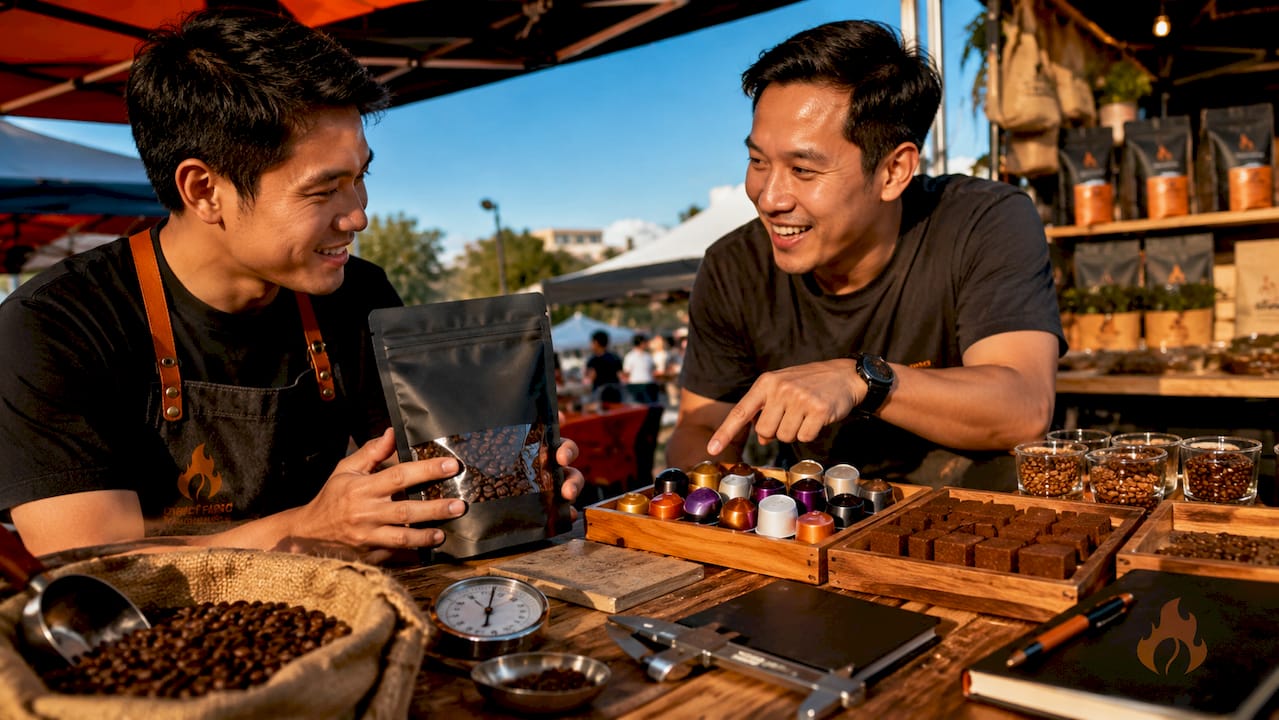
Whole bean and ground coffee signal craft and freshness to enthusiasts who prioritize flavor. Single-serve pods and cups for Keurig-compatible systems appeal to convenience-focused buyers. Concentrates and cold brew formats work well for lifestyle brands targeting active or on-the-go consumers.
Premium positioning almost always benefits from whole bean offerings, since they communicate freshness and customization. Purpose-driven or niche brands often find that a distinctive format, like a cold brew pitcher pack or a specialty blend in a resealable kraft bag, reinforces their identity as much as the label does. Custom coffee branding examples show how format and packaging work together to signal quality.
Balancing operational challenges while protecting your brand
Private label coffee places full operational responsibility on your brand. Inventory management and demand forecasting are yours to own, and misjudging either leads to excess stock or stockouts that damage customer trust.
One practical way to reduce early risk: standardize your base product formats and differentiate through packaging and narrative rather than over-customizing the coffee itself. This shortens development time, controls costs, and gets you to market faster without sacrificing distinctiveness.
At scale, manual packaging limits growth and compromises freshness. Automated systems with nitrogen flushing preserve aromatic quality and deliver consistent fill weights across high volumes. Data-driven quality control methods, including Agtron color tracking and laser particle size analysis, keep roast and grind profiles uniform batch to batch. And register your trademarks for logos and blend names before launch. Protecting your brand identity from the start prevents market confusion and preserves the equity you build over time.
The Flaming Bean as a model for purpose-driven private label differentiation
The Flaming Bean is a clear example of how a private label coffee brand can stand out by building everything around a defined purpose. The brand sources exceptional coffees from renowned growing regions and roasts each one to highlight the character and story behind the bean, not just the flavor.
The visual identity does real work here. A dark, minimalist foundation with fiery orange accents communicates both premium quality and unapologetic confidence. That aesthetic isn’t decoration. It signals to serious coffee enthusiasts that this brand means business.
What makes The Flaming Bean genuinely distinctive is its cause-driven product line. Blends like Evening Roast and Safe Ground aren’t just coffees with good names. They’re tied to real organizations working on digital safety, community protection, and combating exploitation. Customers who buy Safe Ground aren’t just enjoying a well-crafted cup. They’re participating in something larger.
“Brands that combine authentic storytelling with quality coffee and sustainable packaging create stronger emotional connections with consumers, driving loyalty.” — The Flaming Bean
Pro Tip: When you tie a specific blend to a specific cause, name the cause clearly on the packaging. Vague “giving back” language doesn’t build trust. Specificity does.
The Flaming Bean also demonstrates that coffee brand differentiation is an ongoing practice, not a launch-day decision. Engaging with customer feedback and refining both product and messaging keeps the brand relevant and the community growing.
Key Takeaways
Differentiating a private label coffee brand requires purpose-led product development, a reliable manufacturing partner, and consistent storytelling that connects every product decision to your brand’s identity.
| Point | Details |
|---|---|
| Purpose before product | Define your brand mission before development starts; it shapes every flavor, format, and packaging choice. |
| Partner for consistency | Choose a manufacturer who guarantees batch-to-batch quality in flavor profile, roast degree, and extraction. |
| Format fits audience | Match your coffee format (whole bean, concentrate, single-serve) to your customers’ actual brewing habits and lifestyle. |
| Protect your brand assets | Register trademarks for logos and blend names before launch to prevent market confusion and preserve brand equity. |
| The Flaming Bean approach | The Flaming Bean ties quality roasting to cause-driven blends like Evening Roast and Safe Ground, showing that purpose and craft together build lasting loyalty. |
The Flaming Bean is ready to share a cup with you
Great private label coffee isn’t built in a spreadsheet. It’s built around a story worth telling and a product worth drinking. The Flaming Bean brings both together, with carefully sourced beans, bold roasting profiles, and blends that support causes you actually care about.
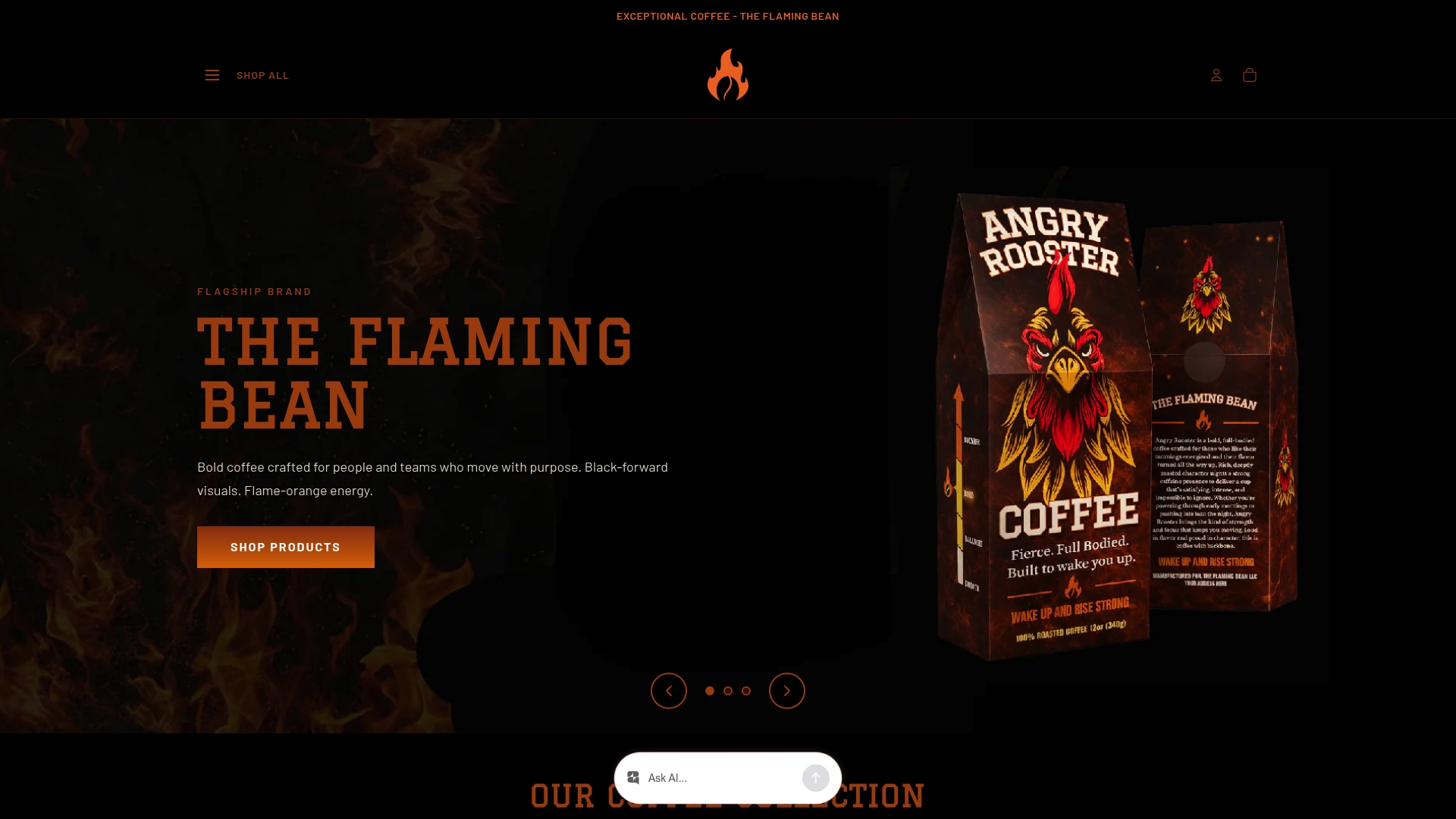
Whether you’re drawn to the smooth comfort of Evening Roast or the meaningful mission behind Safe Ground, every cup from The Flaming Bean is crafted to deliver real flavor and real impact. We’re not filling shelf space. We’re building a community around coffee that means something. Browse our signature blends and find the one that fits your moment.
Comments