
The Best Moka Pot Coffee Beans for a Rich, Bold Cup

For the best moka pot coffee, start with The Flaming Bean Evening Roast (medium-dark, smooth chocolate and caramel notes, available as whole bean or ground via US subscription), The Flaming Bean Safe Ground (medium-dark, earthy and bold with a mission-driven story, US subscription and one-off orders), and a quality medium-dark single-origin or blend from a trusted roaster. Lab testing of 10 coffees across moka pot sizes confirmed that medium to medium-dark roasts produce the best balance, body, and resistance to harsh acidity in moka pots. Here are the top picks at a glance:
- The Flaming Bean Evening Roast — Medium-dark roast with chocolate and caramel tasting notes; delivers a syrupy, full body that holds up beautifully under moka pot heat. Available whole bean and ground, US subscription and one-off orders at theflamingbean.com.
- The Flaming Bean Safe Ground — Medium-dark blend with earthy, bold flavor; part of The Flaming Bean’s mission-driven lineup supporting digital safety causes. Whole bean and ground, US subscription and one-off at theflamingbean.com.
- A quality medium-dark Arabica/Robusta blend — Robusta adds crema and body; look for blends labeled “espresso” or “moka” at specialty retailers or online. Widely available in the US as preground or whole bean.
- A medium-dark single-origin Ethiopian or Brazilian — Ethiopian brings floral brightness that survives moka extraction; Brazilian adds nutty sweetness and low acidity. Available at specialty roasters and grocery chains nationwide.
- A dedicated moka-grind preground blend — For convenience without a grinder, several roasters offer preground at the right texture. Trades some freshness for ease; best as a backup option.
Key Takeaways
Medium to medium-dark roasts ground to a table-salt texture are the most reliable starting point for great moka pot coffee, and freshness matters as much as roast level.
| Point | Details |
|---|---|
| Best roast for moka pot | Medium to medium-dark roasts deliver body, sweetness, and resistance to harsh bitterness. |
| Starting grind texture | Aim for table-salt texture (medium-fine); never tamp the basket. |
| Freshness first | Buy whole bean, check the roast date, and grind immediately before brewing. |
| Technique over beans | Steady medium heat and removing the pot before the last gurgle matter more than the bean alone. |
| The Flaming Bean picks | Evening Roast and Safe Ground are medium-dark, US-available options on subscription or one-off order. |
Table of Contents
- How do these moka pot coffees compare side by side?
- How we picked and tested these coffees
- How do you choose the right coffee for a moka pot?
- What’s the best step-by-step moka pot brewing method?
- A closer look at each recommended coffee
- Why does freshly roasted whole-bean coffee change your moka pot results?
- Sources
How do these moka pot coffees compare side by side?
A moka pot runs at roughly 1.5–2 bars of pressure, not the 9 bars of an espresso machine. That lower pressure combined with higher brew temperatures is exactly why roast level and grind texture matter so much: the wrong combination produces bitterness fast.
How we picked and tested these coffees
Good recommendations need a repeatable process. Here is how these picks were evaluated:
- Roast profile screening — Only medium to medium-dark roasts were shortlisted. Light roasts tend to taste sour or thin under moka pot heat; very dark roasts push into burnt territory quickly.
- Grind calibration — Each coffee was tested starting at a medium-fine grind (table-salt texture) and adjusted one step finer and one step coarser to observe extraction behavior and flavor shift.
- Freshness check — Coffees were assessed within two to four weeks of roast date. Stale beans were excluded regardless of roast profile.
- Repeatability across moka pot sizes — Brews were run in both a 3-cup and a 6-cup stovetop moka pot, using the same filtered water, dose, and starting grind each time. Wirecutter’s equipment testing confirms that consistent heating and good pot design make results repeatable, which matters when isolating roast and grind variables.
- Tasting metrics — Each brew was scored on body, clarity, bitterness, sweetness, and overall value. Brews with harsh acidity or burnt notes at the standard settings were dropped.
Taste is personal. A coffee that scores well for body and low bitterness here may still need grind or dose adjustment in your specific pot. Use these picks as a starting point, then dial in from there.
How do you choose the right coffee for a moka pot?
Medium to medium-dark roasts paired with a medium-fine grind are the best starting point for most moka pots. That combination gives you enough body and sweetness to hold up under the pot’s aggressive heat without tipping into bitterness.
Why roast level matters more than origin
A moka pot’s higher brew temperature extracts compounds aggressively. Light roasts, which retain more acidity and delicate aromatics, often taste sharp or sour because those bright notes amplify under heat. Medium-dark roasts develop caramel, chocolate, and nutty compounds that withstand the moka pot’s extraction better and produce the syrupy body most people associate with a great stovetop cup. You can read more about how roast level affects flavor in The Flaming Bean’s roast guide.
Very dark roasts are riskier. The line between “bold and rich” and “burnt and flat” is thin when you add moka pot heat on top of an already heavily roasted bean.
Arabica vs. Robusta: what each brings
Pure Arabica blends give you sweetness, complexity, and lower bitterness. Neither is wrong. If you want a cleaner, more nuanced cup, go all-Arabica. If you want something closer to a café-style espresso shot, a small Robusta addition helps.
Whole bean vs. preground
Whole bean wins on freshness every time. Ground coffee starts losing volatile aromatics within minutes of grinding. For a moka pot, where the brew is short and intense, fresh-ground coffee makes a noticeable difference in clarity and sweetness. Preground “moka” grinds are a solid convenience option, but they trade some of that brightness for shelf life.
Grind dial-in checklist:
- Target texture: table salt (medium-fine). Not powdery, not chunky.
- Pinch test: rub a small amount between your fingers. It should feel slightly gritty, not silky.
- If your brew sputters and spits aggressively, grind coarser.
- If your brew tastes watery or weak, grind slightly finer.
- Never tamp the grounds in the basket. Level them gently and leave them loose.
- Use a burr grinder for consistent particle size; blade grinders create uneven particles and frictional heat that degrades flavor.
Pro Tip: Look for a roast date on the bag, not just a “best by” date. Aim to brew within two to four weeks of roast. Beans need 24–72 hours of rest after roasting to degas properly, so a bag roasted yesterday is actually better than one roasted six months ago with a long shelf life.
Water quality is the other variable most home brewers overlook. Hard water with high mineral content can mute sweetness and amplify bitterness. Filtered tap water or low-mineral bottled water gives you a cleaner extraction. Distilled water, on the other hand, lacks the minerals needed for proper extraction and produces a flat cup.
What’s the best step-by-step moka pot brewing method?
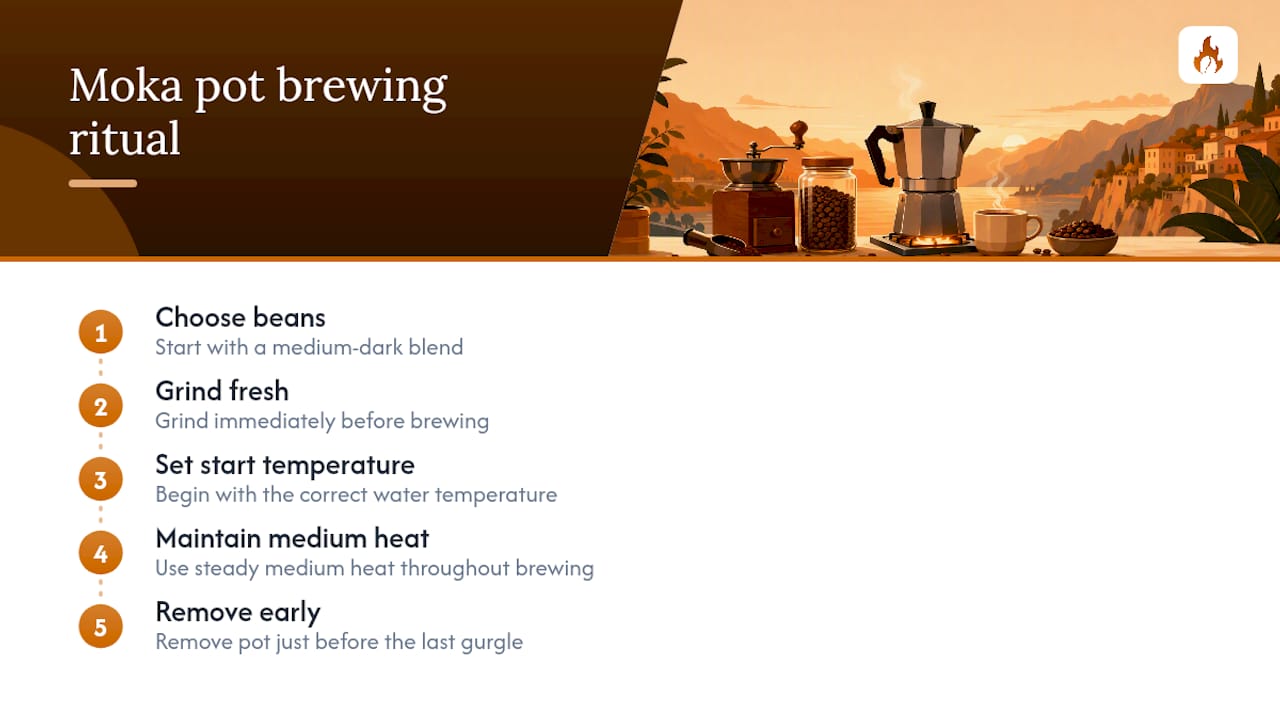
Technique matters as much as the beans. Detailed brewing workflow shows that water temperature at the start, steady medium heat, and removing the pot just before the last gurgle have more impact on final cup quality than any single “perfect” bean choice.
- Fill the bottom chamber with hot or warm water up to just below the pressure valve. Starting with hot water reduces the time the grounds spend on heat, which cuts bitterness.
- Fill the basket with your medium-fine ground coffee. Level it gently with your finger. Do not pack or tamp.
- Screw the top and bottom together firmly. Use a cloth if the bottom chamber is already hot.
- Place on medium heat. Medium, not high. High heat rushes extraction and scorches the coffee.
- Keep the lid open so you can watch the stream as coffee rises into the upper chamber.
- Watch the stream color. A steady, dark amber stream is good. When it starts to lighten or sputter, the extraction is nearly done.
- Remove from heat just before the final gurgle. That last burst of steam pushes bitter, over-extracted liquid through the grounds.
- Transfer immediately to a warmed cup or small pitcher. Leaving coffee in the upper chamber continues cooking it against the hot metal.
- Stir before serving if you brewed a full pot. The first coffee out is stronger; stirring evens out the cup.
Pro Tip: Run the bottom of the moka pot under cold water for a few seconds right after you remove it from the heat. This stops residual heat from continuing to extract and gives you a cleaner, less bitter cup.
Common mistakes and fixes:
- Grind too fine: Grounds clog the filter, pressure builds unevenly, and the cup tastes bitter and harsh. Fix: go one step coarser.
- Heat too high: Coffee rushes through too fast, tastes burnt, and the pot can spit. Fix: drop to medium or medium-low.
- Leaving on heat after brewing: The coffee sitting in the upper chamber keeps cooking. Fix: remove and transfer immediately.
- Overfilling the water chamber: Water above the pressure valve is a safety risk and produces an uneven brew. Fix: fill to just below the valve.
- Packing the grounds: Increases resistance, raises internal pressure, and produces bitter over-extraction. Fix: level, never tamp.
Serious Eats’ moka pot testing confirms that the right pot plus refined technique produces a rich, full cup without burnt flavors. The beans matter, but technique is what separates a great cup from a bitter one.
A closer look at each recommended coffee
Here is the detail you need to pick the right bag and replicate the starting settings at home.
The Flaming Bean Evening Roast
- Tasting notes: Chocolate, caramel, smooth finish with low bitterness
- Roast level: Medium-dark
- Starting grind: Medium-fine (table-salt texture); on a numbered burr grinder, start at the midpoint between drip and espresso settings
- Dose: 3-cup pot: 15–17g; 6-cup pot: 28–32g
- Format: Whole bean and ground; subscription and one-off orders
- Where to buy: Theflamingbean, ships across the US
- Preground option: Yes
- Alternative if unavailable: Any medium-dark Arabica blend with chocolate/caramel tasting notes from a specialty roaster
The Flaming Bean Safe Ground
- Tasting notes: Earthy, bold, slightly smoky with a full body
- Roast level: Medium-dark
- Starting grind: Medium-fine (table-salt texture)
- Dose: 3-cup pot: 15–17g; 6-cup pot: 28–32g
- Format: Whole bean and ground; subscription and one-off orders; a portion of proceeds supports digital safety causes
- Where to buy: Theflamingbean, ships across the US
- Preground option: Yes
- Alternative if unavailable: A medium-dark blend with earthy, full-body notes from a specialty roaster
Medium-dark Arabica/Robusta blend (specialty roaster)
- Tasting notes: Rich, thick body with a light crema layer; dark chocolate and roasted nut notes
- Roast level: Medium-dark
- Starting grind: Medium-fine; Robusta content means you can go very slightly finer without clogging
- Dose: 3-cup pot: 15–17g; 6-cup pot: 28–32g
- Format: Whole bean or preground; widely available
- Where to buy: Specialty coffee shops, online retailers, and some grocery chains across the US
- Preground option: Often available labeled “espresso” or “moka” grind
- Alternative: Any Italian-style espresso blend with Robusta content
Medium-dark Ethiopian single-origin
- Tasting notes: Floral, berry brightness layered over dark chocolate; complex and aromatic
- Roast level: Medium to medium-dark
- Starting grind: Medium-fine; Ethiopian beans tend to be denser, so start at the finer end of medium-fine
- Dose: 3-cup pot: 14–16g; 6-cup pot: 26–30g
- Format: Whole bean preferred for freshness; available at specialty roasters
- Where to buy: Specialty roasters and online subscription services across the US
- Preground option: Less common; whole bean strongly recommended
- Alternative: A medium-dark Kenyan single-origin for similar brightness with more body
Medium-dark Brazilian single-origin
- Tasting notes: Nutty, low-acid, mild sweetness with a clean finish
- Roast level: Medium-dark
- Starting grind: Medium-fine; Brazilian beans are forgiving and work well across a range of grind settings
- Dose: 3-cup pot: 15–17g; 6-cup pot: 28–32g
- Format: Whole bean; widely available at specialty and mainstream roasters
- Where to buy: Specialty roasters, Whole Foods, and online retailers across the US
- Preground option: Available at many retailers
- Alternative: A medium-dark Colombian for similar low-acid sweetness
Dedicated moka-grind preground blend
- Tasting notes: Varies by brand; generally bold, full-bodied, and consistent
- Roast level: Medium-dark
- Starting grind: Pre-set at moka grind; no adjustment needed
- Dose: Follow pack instructions; typically 15–17g for a 3-cup pot
- Format: Preground only; available in cans and bags
- Where to buy: Grocery chains, specialty retailers, and online across the US. Bialetti’s whole-bean and preground moka blends are a widely available example of dedicated moka-format coffee.
- Preground option: Yes, by definition
- Alternative: Any medium-dark preground labeled “espresso” or “moka” grind
Why does freshly roasted whole-bean coffee change your moka pot results?
Freshly roasted whole beans ground on a burr grinder materially improve extraction uniformity and flavor clarity in moka pots. This is not a marginal difference. It is the single biggest upgrade most home brewers can make without changing their equipment.
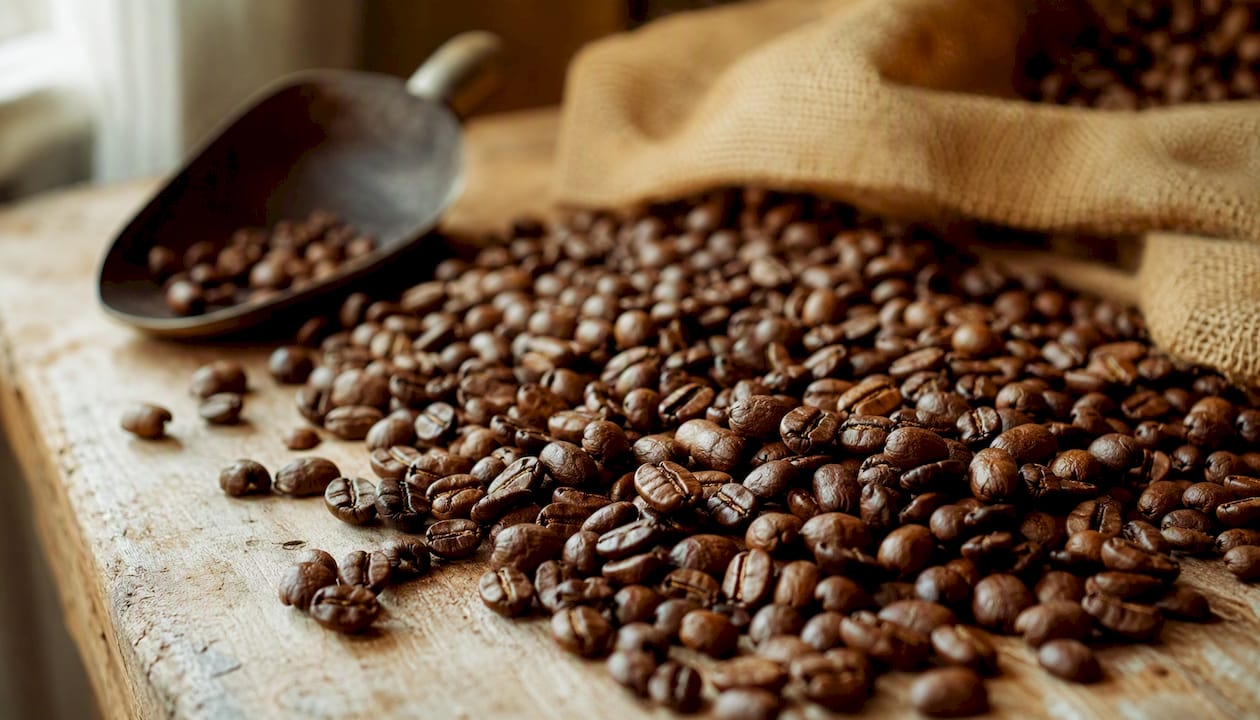
Burr grinders produce consistent particle sizes. Consistent particles extract evenly, which means the water moving through the basket encounters uniform resistance and pulls flavor compounds at the same rate across the whole bed. Blade grinders, by contrast, create a mix of fine powder and coarse chunks. The powder over-extracts and turns bitter; the chunks under-extract and taste flat. You end up with both problems in the same cup. Balance Journal’s testing repeatedly highlighted grind uniformity as a key factor in extraction evenness for moka pots.
Freshness compounds the effect. Whole beans sealed after roasting retain CO2 and volatile aromatic oils. Once ground, those compounds start escaping immediately. A bag of preground coffee that has been sitting on a shelf for three months has already lost much of what makes it taste bright and sweet. For a moka pot, where the brew is short and intense, there is no time to coax flavor out of stale grounds.
Pro Tip: If you are buying whole beans, look for a one-way valve on the bag. That valve lets CO2 escape without letting oxygen in, which keeps the beans fresher longer. A bag without a valve is a minor red flag for freshness management.
The practical actions that make the biggest difference:
| What to change | Expected impact |
|---|---|
| Switch from blade to burr grinder | More even extraction, less bitterness, better body |
| Buy whole bean instead of preground | Brighter flavor, more aromatic complexity |
| Brew within 2–4 weeks of roast date | Noticeably sweeter, cleaner cup |
| Use filtered water | Reduces mineral interference, cleaner flavor |
| Grind immediately before brewing | Preserves volatile aromatics that disappear within minutes |
The Flaming Bean ships Evening Roast and Safe Ground as whole beans with roast dates on the bag, and both are available on subscription so you always have a fresh bag arriving before the current one goes stale. For grinder options, The Flaming Bean also carries a selection of burr grinders suited to home moka pot brewing.
Why the best moka pot coffee is more about ritual than perfection
There is a tendency in coffee circles to treat bean selection as the primary variable. Buy the right bag, and everything else follows. The evidence does not support that. Technique, specifically water temperature at the start, steady medium heat, and removing the pot just before the last gurgle, matters more to final cup quality than any single bean choice. The beans set the ceiling; technique determines how close you get to it.
What this means practically: a medium-dark blend brewed with care and attention will outperform a premium single-origin rushed on high heat every time. The moka pot rewards patience and consistency more than it rewards expensive coffee. Start with good beans, yes. But invest equal attention in the process.
The other thing experienced brewers know is that grinding fresh immediately before brewing is not a ritual for its own sake. It preserves the bold, earthy intensity that makes a moka pot cup worth making in the first place. Oxidation is fast and irreversible. Grind, brew, drink.
The Flaming Bean makes it easy to get started with the right beans
If you want to skip the guesswork on sourcing, The Flaming Bean’s Evening Roast and Safe Ground are two of the picks on this list for a reason. Both are medium-dark roasts dialed in for bold, full-body brewing, and both ship directly to your door across the US in whole bean or ground format.
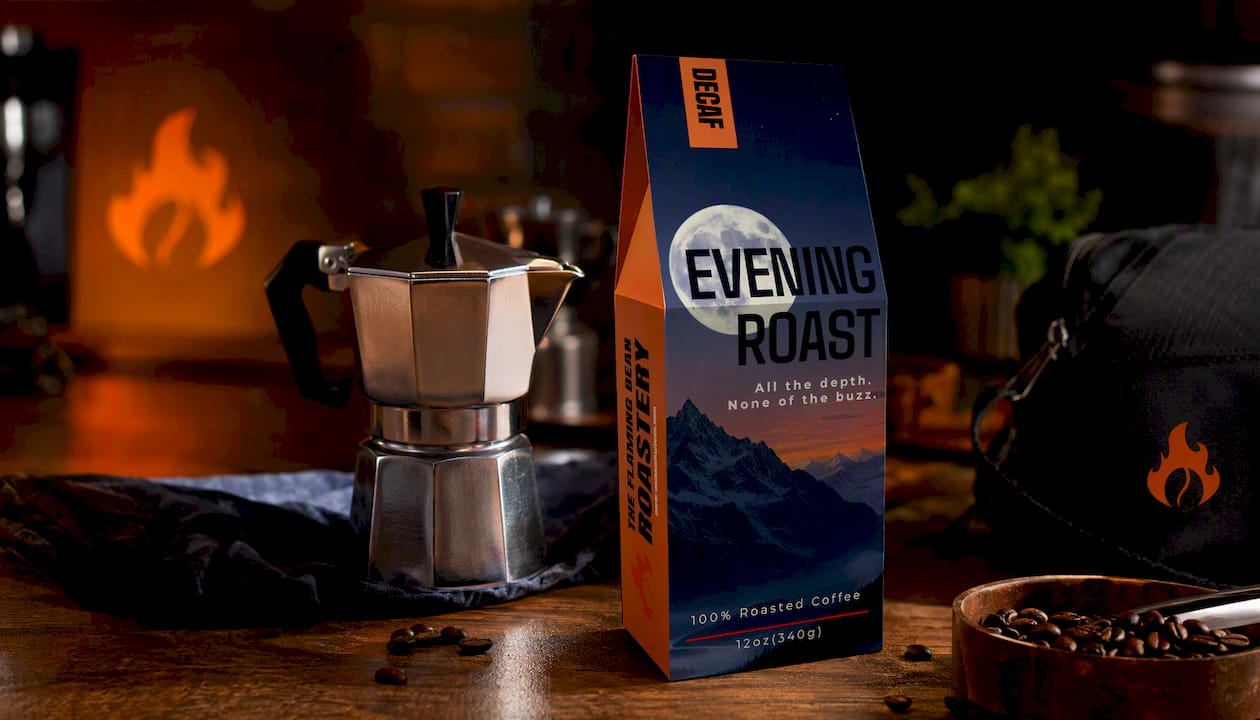
Evening Roast delivers smooth chocolate and caramel notes that hold up beautifully under moka pot heat. Safe Ground brings an earthy, bold profile and supports digital safety causes with every bag. Both are available as one-off orders or on subscription, so you can set a delivery cadence that keeps a fresh bag on hand without thinking about it.
We sell these coffees because we believe in them. Order a bag of Evening Roast or Safe Ground today and brew your first cup using the steps in this guide.
Sources
- Best Coffee for Moka Pots 2026: Tested - Balance Journal
- The Ultimate Guide to the Best Coffee for Moka Pot Brewing – French Press & Co
- The 4 Best Moka Pots of 2026, Tested & Reviewed — Serious Eats
- Everything You Need to Make Coffee With a Moka Pot — Eater
- Why We Love the Bialetti Moka Pot for 2026 | Reviews by Wirecutter
Recommended
- Bold Coffee Blends: 9 Examples Worth Brewing – The Flaming Bean Roastery
- What Does Bold Coffee Mean? Flavor and Brewing Guide – The Flaming Bean Roastery
- Make Cafe Quality Coffee at Home: A Barista Guide – The Flaming Bean Roastery
- Why Some Coffee Tastes Chocolatey: A Flavor Guide – The Flaming Bean Roastery
Comments