
How to Develop a Coffee Subscription Service in 2026

A coffee subscription service is a recurring delivery model that sends curated coffee to customers on a set schedule based on their preferences, roast level, and brewing habits. The subscription coffee model gives entrepreneurs predictable monthly revenue while giving customers fresh coffee without the hassle of reordering. Startup costs run $5,000–$15,000, covering sourcing, branding, and e-commerce setup. That range is low enough for a solo founder to launch without outside funding. The Flaming Bean is one example of a brand that built a loyal subscriber base by pairing exceptional roasts with a clear sense of purpose, proving that great coffee and great values attract long-term customers.
How to develop a coffee subscription service from scratch
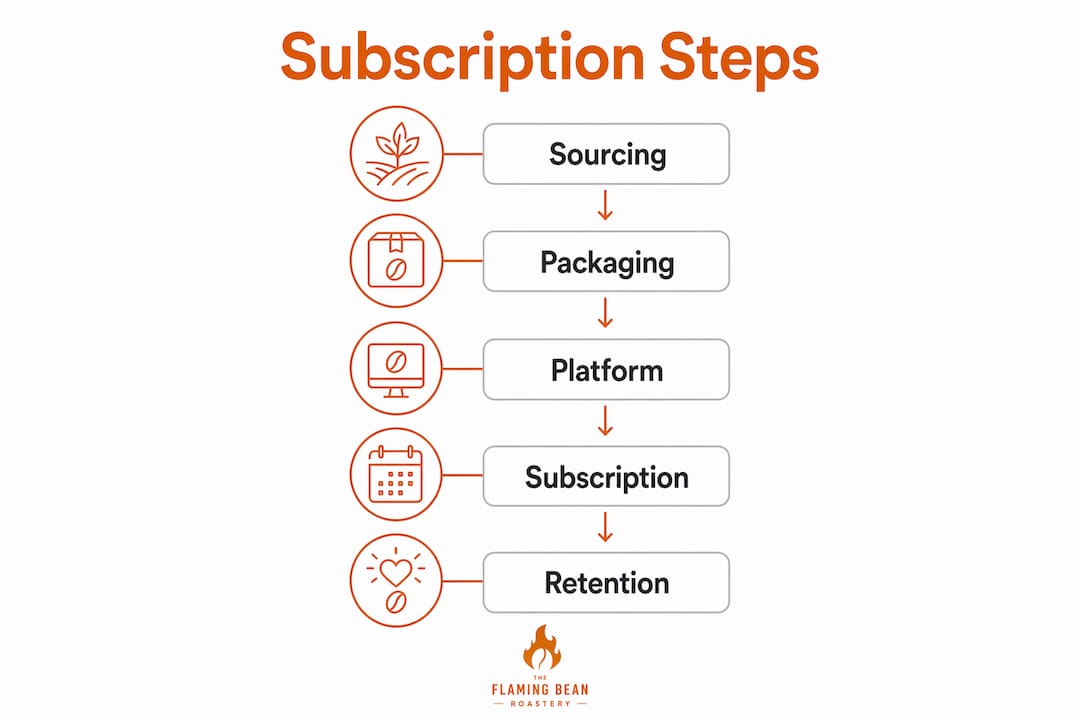
Launching a coffee subscription business starts with three decisions: where you source your coffee, how you sell it, and how you ship it. Get those three right, and everything else becomes manageable.
Sourcing strategy
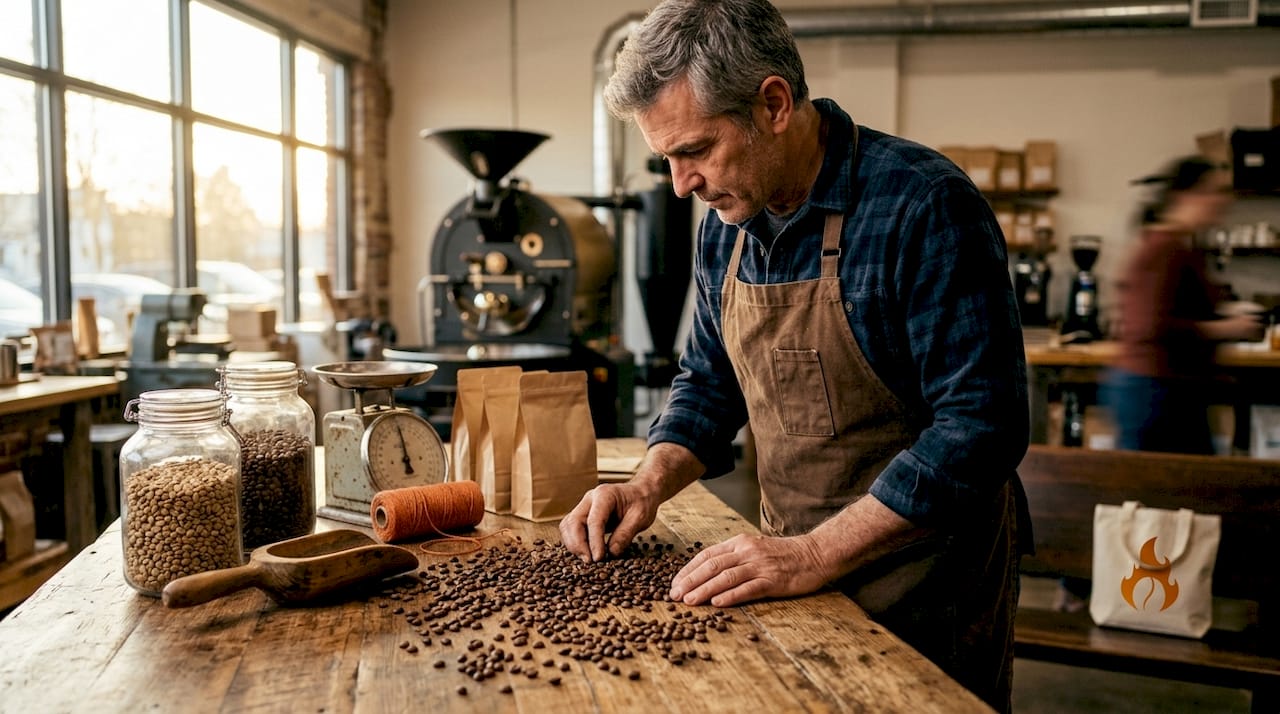
You have three sourcing paths. The first is curating from established roasters, which keeps your startup costs low and your catalog flexible. The second is roasting your own beans, which gives you full control over flavor and margins but requires equipment investment. The third is a hybrid model, where you roast a signature line and supplement it with curated single-origins. The hybrid approach appeals to the widest range of subscribers because it balances consistency with discovery.
Platform and tools
Shopify is the most widely recommended platform for subscription coffee businesses. It integrates with subscription management apps that handle billing, pause requests, and frequency changes without manual work. You will also need a reliable payment processor, a shipping carrier account, and a customer email platform. Budget for these tools inside your initial $5,000–$15,000 estimate.
Packaging and freshness
Packaging is not decoration. It is a freshness system. Use one-way valve bags that release CO2 without letting oxygen in. Ship within 48–72 hours of roasting whenever possible. Label every bag with the roast date, not a “best by” date, so subscribers know exactly what they are getting. Branding your packaging consistently builds recognition and trust. For guidance on custom coffee branding, The Flaming Bean’s resources show how visual identity translates directly into subscriber loyalty.
Pro Tip: Order your first packaging run in a smaller quantity than you think you need. You will almost certainly want to adjust the design after your first 50 shipments.
How do you design a coffee subscription model that retains customers?
The subscription model itself is where most new businesses either win or lose customers. A poorly designed model creates confusion, stale coffee, and cancellations. A well-designed one builds habits.
Subscription types
Three subscription types dominate the market. A signature blend subscription sends the same coffee every cycle, which works well for customers who found a roast they love. A rotating single-origin subscription sends a different origin each cycle, which appeals to curious drinkers who want to explore. A hybrid model combines both, giving subscribers a reliable staple plus one rotating discovery coffee per shipment. The Flaming Bean’s lineup, which includes bold blends like Abyssal and Angry Rooster alongside smooth options like Evening Roast, is naturally suited to a hybrid format.
Frequency and cadence
Offering 2–3 delivery frequency options covers the vast majority of subscriber demand. Weekly, biweekly, and monthly cover nearly every brewing habit. Matching delivery frequency to actual consumption is the single most effective way to prevent stale coffee complaints. Nearly 60% of subscribers report saving money or reducing waste when their delivery cadence matches how fast they actually brew. That statistic tells you that cadence accuracy is a retention tool, not just a logistics detail.
Grind options and pricing
Offer whole bean as your default. Whole bean subscribers churn less and report higher satisfaction than pre-ground subscribers. That happens because whole bean coffee stays fresh longer and signals to the subscriber that they are getting a premium product. For pricing, subscriptions typically discount 10–15% compared to retail. That discount is enough to feel meaningful without destroying your margins.
- Set your retail price first, then apply the subscription discount.
- Offer whole bean as the default, with pre-ground as an opt-in.
- Give subscribers the ability to pause, swap, or skip a shipment without canceling.
- Include a roast date on every bag.
- Add an origin card or brew guide to every shipment.
Pro Tip: Include a short, personal roaster note in each shipment. Brew cards and roaster notes turn a transaction into a relationship, and that shift alone reduces churn.
What marketing strategies work best for a coffee subscription?
Acquiring subscribers costs more than keeping them, so your marketing needs to convert efficiently from the start.
- Tasting quizzes: Personalization and interactive quizzes reduce trial cancellations and increase loyalty. A short quiz that asks about roast preference, brewing method, and flavor notes helps new subscribers feel like the service was built for them.
- Trial offers: A discounted first box lowers the barrier to entry. Price it to cover your cost of goods and shipping, not to make a profit. The goal is to get coffee into someone’s hands.
- Social media: Short videos showing the roasting process, origin stories, and unboxing experiences perform well on Instagram and TikTok. Authenticity outperforms production value in this category.
- Influencer partnerships: Micro-influencers in the coffee and food space, typically those with 10,000–100,000 followers, deliver better conversion rates than larger accounts because their audiences trust their recommendations.
- Content marketing: Blog posts, brew guides, and origin stories build organic search traffic over time. The Flaming Bean’s approach of connecting coffee to community and purpose gives content a natural angle that goes beyond product promotion.
- Feedback loops: Send a short survey after the third shipment. Ask what the subscriber loves and what they would change. Use that data to adjust their next shipment. Personalization works best when it is driven by real feedback after several deliveries, not just an onboarding quiz.
Building a strong brand community around your subscription amplifies every marketing channel. Subscribers who feel connected to your brand refer friends, leave reviews, and stay longer.
How do you retain subscribers and scale without burning out?
Retention is where subscription businesses are won or lost. Acquiring a new subscriber costs significantly more than keeping an existing one, so every percentage point of churn you prevent goes straight to your bottom line.
- Monitor churn weekly: Track cancellation rates by cohort, meaning group subscribers by the month they joined. This shows you whether newer subscribers churn faster than older ones, which signals an onboarding problem.
- Build a cancellation flow: A sophisticated cancellation flow collects the reason for cancellation and offers a targeted save option. If someone says the coffee is arriving too fast, offer a longer interval. If they say it is too expensive, offer a smaller bag size or a temporary discount.
- Send educational content: Adding origin cards, brewing recipes, and roaster notes to each shipment reduces churn by turning a commodity delivery into an experience. Subscribers who learn something new each month have a reason to stay.
- Manage inventory carefully: Niche offerings like competition-grade or co-fermented coffees attract passionate subscribers but carry real sourcing and inventory risks. Limit exclusive offerings to what you can reliably restock.
- Celebrate tenure: Acknowledge subscribers at the 3-month, 6-month, and 12-month marks with a small gift, a handwritten note, or early access to a new roast. Recognition builds loyalty that discounts cannot buy.
Pro Tip: The median subscriber tenure is 6–9 months, but top roasters push past 12 months. The gap between average and excellent is almost always explained by the quality of the relationship, not the quality of the coffee alone.
Scaling sustainably means adding subscribers at a pace your roasting, packaging, and shipping operations can support. Growing too fast creates fulfillment errors, and fulfillment errors create cancellations.
Key Takeaways
A coffee subscription service succeeds when cadence accuracy, product quality, and subscriber relationships are all managed with equal attention.
| Point | Details |
|---|---|
| Start with the right budget | Plan for $5,000–$15,000 in startup costs covering sourcing, branding, and your e-commerce platform. |
| Match delivery to consumption | Aligning shipment frequency with brewing habits prevents stale coffee and reduces churn significantly. |
| Default to whole bean | Whole bean subscribers report higher satisfaction and cancel less often than pre-ground subscribers. |
| Build a cancellation flow | Collecting cancellation reasons and offering targeted save options retains customers who would otherwise leave. |
| Treat education as retention | Brew cards, origin notes, and roaster letters turn monthly deliveries into experiences subscribers look forward to. |
What I’ve learned from watching subscription coffee businesses grow and fail
The businesses that struggle most are the ones that treat their subscription as a logistics operation. They obsess over fulfillment speed and packaging costs while ignoring the fact that their subscribers have no idea where the coffee comes from or why it tastes the way it does.
The businesses that thrive do the opposite. They send a note. They explain the origin. They ask for feedback and actually use it. The operational side matters, but it is table stakes. The relationship is the product.
I have also seen founders make the mistake of launching too many subscription tiers at once. Three tiers sounds like good customer choice. In practice, it creates confusion and increases support volume. Start with one or two clear options, learn what your subscribers actually want, and add complexity only when the demand is obvious.
The hybrid subscription model, combining a reliable signature blend with a rotating single-origin, is the format I would recommend to almost any new entrant. It gives subscribers consistency and discovery in the same box. That combination is hard to walk away from.
One more thing: do not ignore the wholesale side of your business while building subscriptions. Wholesale accounts create volume that stabilizes your roasting schedule and reduces per-unit costs, which makes your subscription margins healthier. The two channels support each other more than most founders realize.
— Tony
The Flaming Bean has what you need to get started
Ready to put these ideas into practice? The Flaming Bean offers a range of signature blends that are well-suited for subscription curation, from the bold intensity of Abyssal to the smooth finish of Evening Roast.
Whether you are building a monthly coffee box service or sourcing for a white label subscription program, The Flaming Bean’s catalog gives you quality and variety in one place. The purpose-driven Safe Ground blend is a subscriber favorite that also supports a meaningful cause, making it a natural fit for brands that want their coffee to stand for something. Check out the full range and find the roasts that will keep your subscribers coming back every month.
FAQ
What is a coffee subscription service?
A coffee subscription service is a recurring delivery model that sends curated coffee to subscribers on a set schedule, typically weekly, biweekly, or monthly, based on their roast and flavor preferences.
How much does it cost to start a coffee subscription business?
Launching a curated coffee subscription typically requires $5,000–$15,000 in initial investment, covering sourcing, branding, and e-commerce setup on a platform like Shopify.
What is the average subscriber tenure for coffee subscriptions?
The median coffee subscriber stays for 6–9 months, but top-performing roasters achieve tenure beyond 12 months by focusing on education, personalization, and relationship-building.
How do I reduce churn in my coffee subscription?
Match delivery frequency to actual consumption habits, include educational content like brew cards and origin notes, and build a cancellation flow that offers pause or swap options before a subscriber leaves.
Should I offer whole bean or pre-ground coffee in my subscription?
Whole bean is the better default. Whole bean subscribers report higher satisfaction and cancel less often, and the format signals freshness and quality to your most engaged customers.
Comments