
What Does Co-Branding Mean for Coffee Brands?

Co-branding in coffee is defined as a collaboration where two or more brands integrate their identities on a single shared product or campaign, making both brands visible to consumers at the point of experience. This is different from simply running a joint promotion. Understanding what co-branding means in coffee gives marketing professionals a sharper tool for expanding reach, building credibility, and creating products that neither brand could produce alone. The strategy ranges from roaster-to-roaster releases with dual branding on the bag to cross-category partnerships that embed coffee into fashion, music, or lifestyle brands.
What does co-branding mean in the coffee industry?
Co-branding is defined as joint branding on a shared product or campaign rather than separate promotions running side by side. Both brands appear together on the packaging, the product, and the consumer experience. A roaster-to-roaster collaboration where two specialty coffee companies release a limited-edition blend under both their names is a textbook example. The consumer picks up the bag and sees two distinct brands presented as one unified offering.
The industry term for this practice is “co-branding,” and it sits within the broader category of brand partnerships. A brand partnership can include sponsorships, endorsements, or affiliate arrangements. Co-branding is narrower. It requires consumer-visible brand integration on an actual product or campaign, not just a logo placement on a banner. That distinction matters when you are writing contracts, briefing creative teams, or pitching a collaboration to a potential partner.
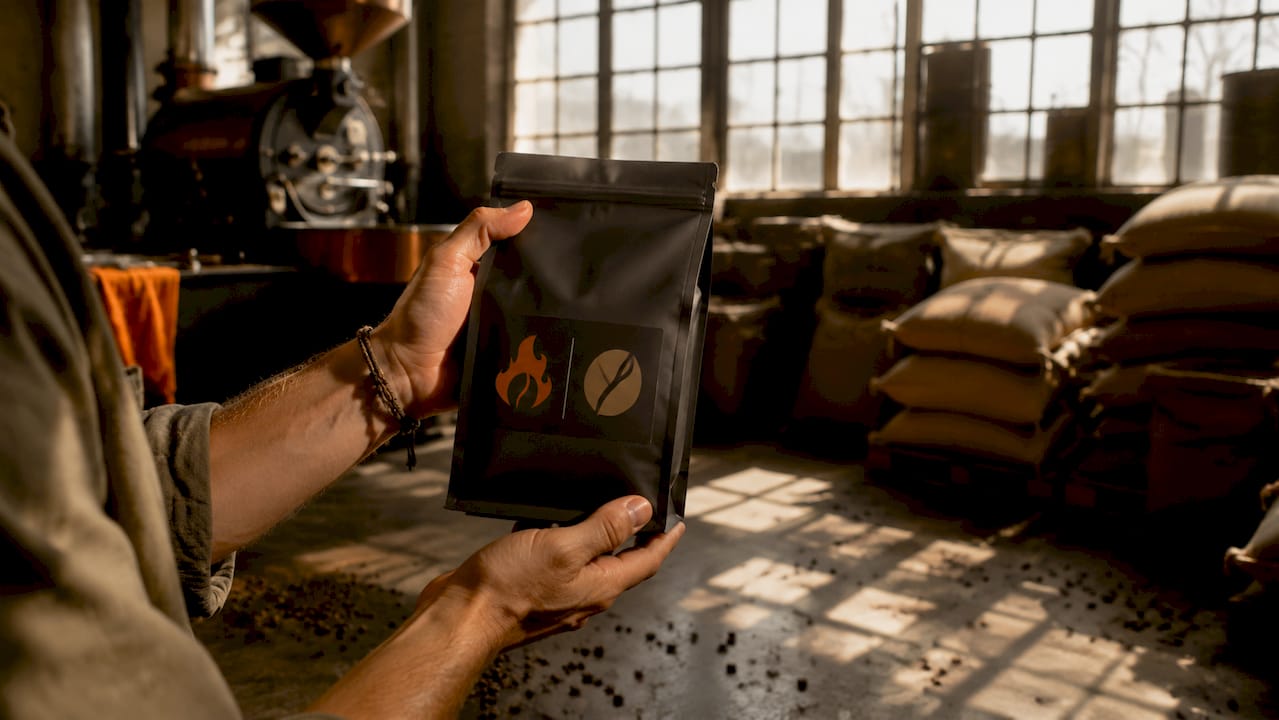
Coffee is a particularly strong category for this strategy because the product itself carries strong identity signals. Origin, roast level, and packaging all communicate values. When two brands align on those signals, the result can feel genuinely additive rather than forced.
How does co-branding differ from co-marketing?
Co-branding and co-marketing are not the same thing, and confusing them creates real problems in execution. Co-branding requires integration at the product or campaign level, while co-marketing focuses on joint promotion with each brand keeping its products separate. Two coffee brands hosting a shared tasting event is co-marketing. Two coffee brands releasing a single blend under both their names is co-branding.
| Dimension | Co-branding | Co-marketing |
|---|---|---|
| Brand visibility | Both brands on one product or campaign | Each brand promotes its own product |
| Product integration | Required | Not required |
| Consumer experience | Single unified offering | Parallel or coordinated promotions |
| Commitment level | Higher, product-level alignment needed | Lower, campaign coordination only |
| Coffee example | Dual-branded limited-edition blend | Joint social media campaign or shared event |
The strategic implications are significant. Co-branding demands alignment on sourcing, quality, and brand voice before a single bag goes to print. Co-marketing can be arranged with a shared content calendar and a mutual agreement on messaging. Marketing professionals who treat these as interchangeable often end up with mismatched expectations, unclear deliverables, and partnerships that dissolve before launch.
What types of co-branding opportunities exist in coffee?
The coffee sector offers a wider range of co-branding formats than most marketers realize. The most recognized format is the roaster-to-roaster collaboration, where two specialty roasters develop a blend together and present it under both brands. This format works well for building credibility within the specialty coffee community and reaching each roaster’s existing audience simultaneously.
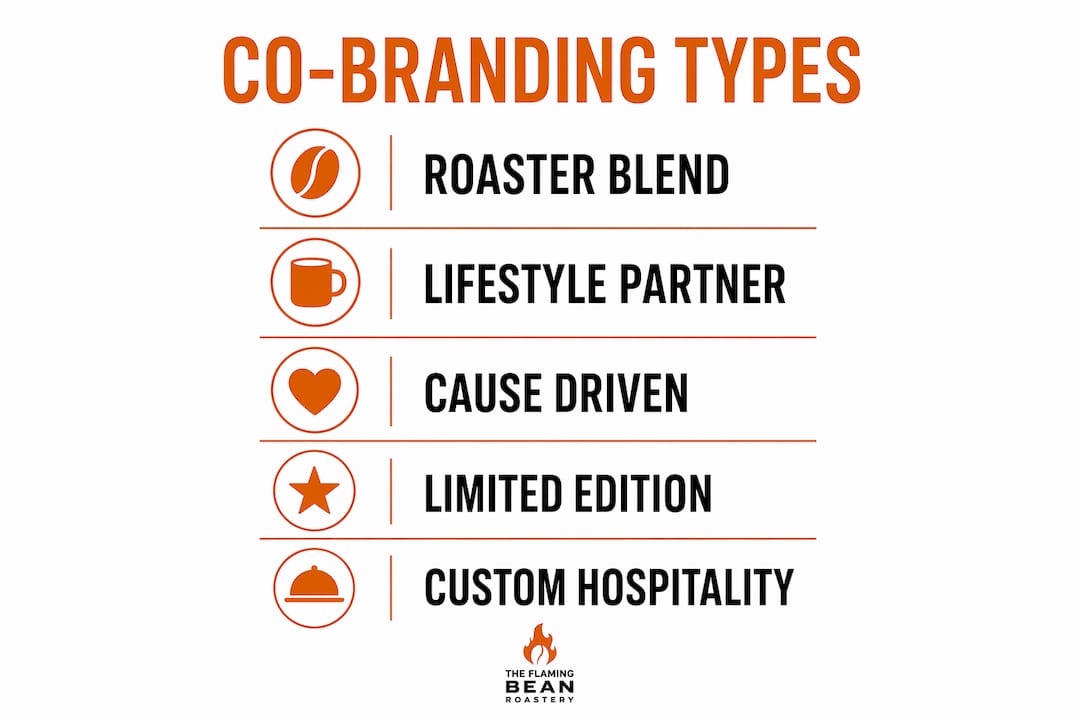
Cross-category partnerships represent a growing opportunity. Coffee brands are using collaborations to embed themselves in fashion, music, and lifestyle sectors, reaching audiences who may not follow coffee media but are deeply engaged with those adjacent communities. A coffee brand co-branding with a streetwear label on a limited-edition bag design is a real format that has gained traction in specialty markets.
Here are the primary types of co-branding opportunities available in the coffee sector:
- Roaster-to-roaster blends: Two roasters develop a single lot or blend together, with both names on the packaging and shared tasting notes.
- Cross-category lifestyle partnerships: Coffee brands collaborate with fashion, music, fitness, or wellness brands on co-branded packaging, merchandise, or experiences.
- Event-based co-branding: A shared visual identity across packaging and branded materials for a specific festival, competition, or cultural moment.
- Cause-driven co-branding: A coffee brand partners with a nonprofit or mission-led organization to create a product that carries both identities and directs proceeds to a shared cause.
- Hospitality and food service co-branding: A roaster partners with a restaurant group or hotel brand to create a house blend that carries both names on menus and packaging.
Each format carries a different level of operational complexity and a different audience reach profile. The right choice depends on your brand’s current positioning and where you want to grow.
What are the strategic benefits of co-branding for coffee brands?
The most direct benefit of co-branding is credibility transfer between partners. When a well-regarded roaster attaches its name to a product alongside a respected lifestyle brand, each brand borrows equity from the other. Consumers who trust one brand extend a degree of that trust to the other. This is especially valuable for newer brands entering a crowded market.
Audience expansion is the second major benefit. A roaster-to-roaster project created a comparative tasting package highlighting each roasting style under a unified co-branded presentation, exposing each roaster’s audience to the other’s work. Neither brand had to spend on paid acquisition to reach those new customers. The product itself did the work.
Additional benefits include:
- Shared marketing costs: Both brands contribute to promotion, reducing the per-brand spend on launches, content, and events.
- Cultural relevance: Cross-category partnerships place coffee brands inside conversations happening in fashion, music, or wellness, building emotional differentiation beyond the cup.
- Long-term partnership value: Co-branding holds long-term potential where brands share risks and recognition equally, creating a foundation for ongoing collaboration rather than a single promotional moment.
- Portfolio depth: A co-branded limited edition adds variety and collectibility to a brand’s product lineup without requiring a full new product development cycle.
Pro Tip: Choose a co-branding partner whose audience overlaps with yours but does not directly substitute your product. Complementary positioning, not competitive positioning, is what makes credibility transfer work.
The brands that get the most out of co-branding treat it as a relationship, not a transaction. The goal is mutual growth, not a one-time sales bump.
How to execute a coffee co-branding project successfully
Execution is where most co-branding projects succeed or fail. Successful co-branding requires synchronizing sourcing, roasting profiles, quality control, packaging approval, and logistics before the product reaches consumers. Each of those steps involves decisions that both brands must agree on, and skipping alignment on any one of them creates problems downstream.
Here is a practical sequence for executing a coffee co-branding project:
- Define the product and scope. Agree on what the co-branded product actually is: a specific blend, a single-origin lot, a packaging collaboration, or a campaign. Vague scope is the leading cause of partnership breakdowns.
- Align on quality standards. Both brands must agree on sourcing criteria, roast profile, and cupping benchmarks. One brand’s “medium roast” may not match the other’s.
- Clarify trademark and packaging rights. Both logos, brand colors, and any claims on the packaging need legal review and approval from both parties before going to print.
- Divide operational responsibilities. Decide who handles fulfillment, who manages retail relationships, and who owns customer service for the co-branded product. Document this in writing.
- Build a shared launch plan. Coordinate content calendars, press outreach, and social media timing so both brands amplify the launch simultaneously.
- Set performance metrics upfront. Agree on what success looks like: units sold, new audience reach, press coverage, or repeat orders. This makes the post-launch review productive rather than contentious.
A common pitfall is confusing co-marketing with true co-branding, which leads to mismatched expectations about how deeply the brands will be integrated. One partner may expect a fully co-branded product while the other assumed a shared Instagram post. Clarity at the contract stage prevents this entirely.
Pro Tip: Work with a coffee roaster who has experience in custom coffee branding before you finalize your co-branding brief. Understanding what is operationally possible saves weeks of back-and-forth.
Key Takeaways
Co-branding in coffee performs best when both brands share overlapping audiences, align on product quality, and treat the collaboration as a long-term relationship rather than a one-off promotion.
| Point | Details |
|---|---|
| Co-branding definition | Both brands appear on a single shared product or campaign, visible to consumers at the point of experience. |
| Co-branding vs. co-marketing | Co-branding requires product-level integration; co-marketing is joint promotion with separate products. |
| Top opportunity types | Roaster-to-roaster blends, cross-category lifestyle partnerships, cause-driven products, and event-based releases. |
| Core strategic benefit | Credibility transfer and audience expansion without paid acquisition costs. |
| Execution priority | Align on sourcing, quality, packaging rights, and operational roles before launch, not after. |
Co-branding in coffee is more than a marketing trend
I have watched co-branding in the coffee industry shift from a novelty to a genuine growth strategy over the past several years. What strikes me most is how many brands still treat it as a marketing shortcut rather than a product commitment. They want the credibility transfer without doing the operational work. That almost always ends badly.
The partnerships that actually build something lasting share one quality: both brands care as much about the product as they do about the exposure. When a roaster and a lifestyle brand sit down and genuinely work through sourcing, roast profile, and packaging together, the result has an authenticity that consumers notice. When they just slap two logos on a bag, consumers notice that too.
The cultural dimension is real and growing. Specialty coffee collaborations increasingly reflect community-building priorities, extending the brand experience into lifestyle domains that coffee alone cannot reach. That is a genuine opportunity for brands willing to do the relationship work. The brands that build a lasting coffee community through co-branding are the ones investing in alignment, not just aesthetics.
My honest advice: before you pitch a co-branding idea to a potential partner, make sure you can answer every question in the execution checklist above. If you cannot, you are not ready to co-brand. You are ready to co-market, which is fine, but it is a different thing.
— Tony
The Flaming Bean and coffee co-branding partnerships
The Flaming Bean brings a full portfolio of carefully crafted blends and roasting expertise to any co-branding conversation. From bold, character-driven offerings to smooth, approachable roasts, there is a product foundation here that suits a wide range of partnership formats.
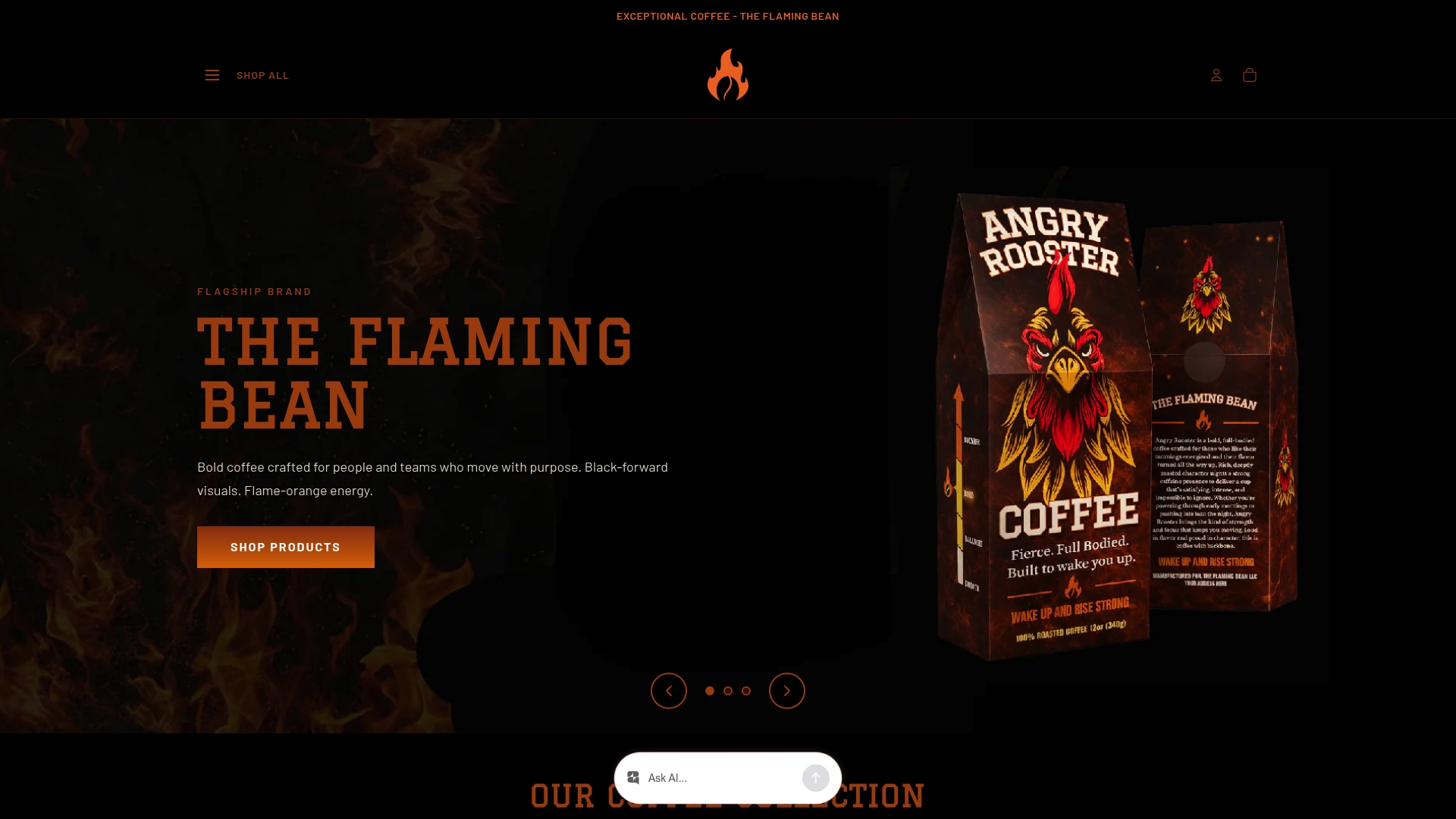
Whether you are exploring a cause-driven collaboration, a limited-edition roaster project, or a custom blend for a hospitality partner, The Flaming Bean’s signature blends and wholesale program are built to support exactly that kind of work. The Evening Roast, for example, is a premium, broadly appealing product that pairs well with lifestyle and hospitality co-branding formats. Reach out to The Flaming Bean to talk through what a collaboration could look like for your brand.
FAQ
What does co-branding mean in coffee?
Co-branding in coffee means two or more brands integrate their identities on a single shared product or campaign, with both brands visible to consumers. It is different from co-marketing, which keeps each brand’s products separate.
How does co-branding differ from brand licensing in coffee?
Coffee brand licensing grants one party the right to use another brand’s name or marks on a product, typically for a fee. Co-branding is a mutual partnership where both brands contribute equity and appear jointly on the product.
What are the main benefits of co-branding for coffee brands?
The main benefits are credibility transfer, access to new audiences, shared marketing costs, and cultural relevance. Co-branding also creates long-term partnership value beyond a single promotional campaign.
What types of co-branding opportunities exist in the coffee sector?
The main types include roaster-to-roaster blends, cross-category lifestyle partnerships, cause-driven co-branded products, event-based releases, and hospitality co-branding with restaurants or hotels.
What is the biggest operational risk in coffee co-branding?
The biggest risk is confusing co-marketing with co-branding, which leads to mismatched expectations about product integration. Aligning on sourcing, quality standards, packaging rights, and fulfillment responsibilities before launch prevents most execution failures.
Comments