
Why Coffee Supports Communities Around the World

Coffee does more than wake you up. It supports millions of families worldwide, funds schools and clinics, and gives women in farming communities real financial independence. Here is a quick look at how coffee creates positive change:
- Economically: Coffee farming generates income for smallholder families in rural areas across Africa, Latin America, and Asia.
- Socially: Programs tied to coffee production fund education, healthcare, and women’s empowerment.
- Environmentally: Sustainable farming methods protect ecosystems and keep farms productive for future generations.
- Through brands: Companies like Think Coffee, Community Coffee, Nestlé, and The Flaming Bean run programs that connect your daily cup to real community outcomes.
Why coffee supports communities through economic opportunity
Coffee is one of the most traded agricultural commodities in the world, and that trade flows directly into rural households. Around 25 million families depend on coffee production globally, most of them smallholder farmers with limited access to other income sources. When coffee prices hold steady and buyers pay fairly, those families can cover school fees, medical bills, and home improvements.
Fair Trade certification is one of the clearest ways the industry translates good intentions into dollars. Fair Trade partners generated $31 million in Community Development Funds in 2021 alone, money directed by the farmers themselves toward local priorities. Coffee cooperatives take this further by pooling resources so smallholders can negotiate better prices, access wet-mill equipment, and reach export markets they could never enter alone.
Key economic support mechanisms include:
- Fair prices that protect farmers from volatile commodity markets
- Community Development Funds financing local infrastructure
- Cooperative membership giving farmers collective bargaining power
- Farmer training programs improving yield and bean quality
- Nestlé’s climate-resilient tree programs reducing crop loss risk
Community Coffee, a Louisiana-based brand with deep roots in the American South, has long supported the farming communities it sources from through direct partnerships and grower programs. These relationships keep money moving through the supply chain in ways that benefit people at every level.
How coffee drives social change and empowers people
The social impact of coffee goes well beyond income. In Uganda, entrepreneur Meridah Nandudu built Bayaaya Specialty Coffee in Mbale and now buys directly from over 600 women farmers, overcoming deep cultural resistance in a region where coffee has traditionally been controlled by men. Women did the farming, the harvesting, and the drying, but the money went straight to their husbands. Nandudu changed that by paying women directly and offering an extra incentive per kilogram to get the men on board.
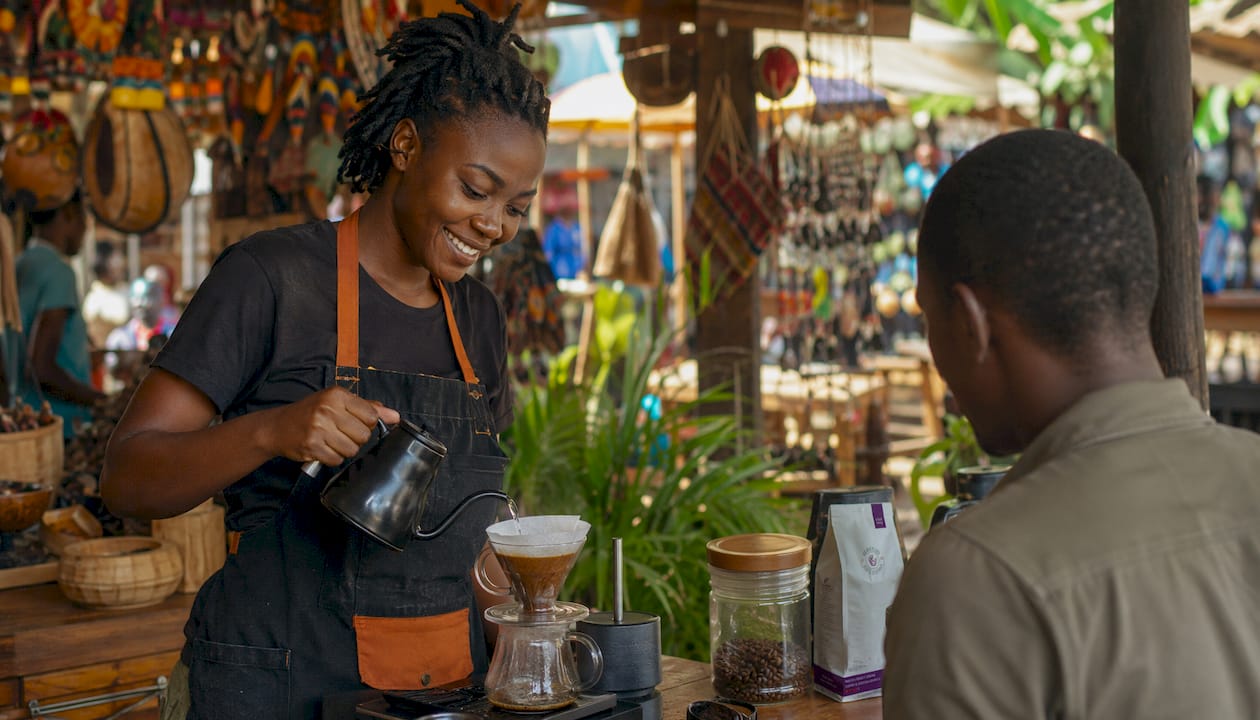
The results went beyond finances. Women who earned their own money reported leaving abusive situations, paying school fees without asking permission, and gaining respect within their households. Financial independence, it turns out, reduces domestic violence and sparks community entrepreneurship at the same time.
Fair Trade coffee also supports women’s leadership training and safe working conditions as part of its certification standards. Social initiatives tied to coffee include:
- Women’s direct-selling programs that bypass male gatekeepers
- Community Development Funds targeting education and healthcare
- Entrepreneur training for young farmers entering the market
- Mentorship networks connecting new growers to experienced producers
- Think Coffee’s direct-trade model that keeps more money in origin communities
The Flaming Bean takes this spirit into the American market through purpose-driven blends like Safe Ground and Mission Fuel, each tied to nonprofits working on community protection, digital safety, and exploitation prevention. Buying a bag is a simple way to support causes through coffee buying without any extra effort.
What sustainable farming does for coffee-growing communities
Sustainable farming practices protect the land that coffee communities depend on. Agroforestry, which grows coffee under a canopy of shade trees, preserves biodiversity, reduces soil erosion, and keeps farms cooler as temperatures rise. Organic cultivation cuts chemical costs for farmers and protects local water sources. These are not just environmental wins; they are economic ones too, because a degraded farm produces less and earns less.
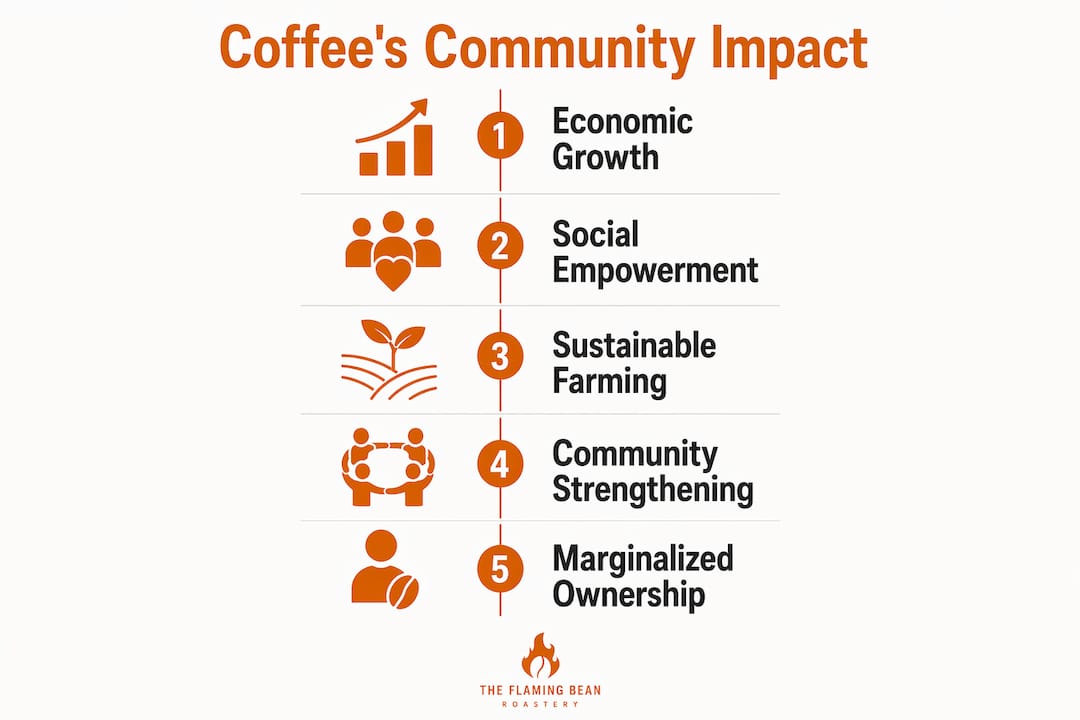
Nestlé has committed to distributing climate-resilient coffee tree varieties and providing farmer training on harvesting and post-harvest handling. Programs like these reduce the risk of crop failure and help communities plan for the long term rather than scrambling season to season.
Environmental efforts across the industry include:
- Agroforestry systems that protect biodiversity and reduce erosion
- Organic farming reducing chemical input costs for farmers
- Soil conservation techniques maintaining long-term productivity
- Water management practices protecting local watersheds
- Distribution of climate-resilient seedlings to vulnerable farming regions
How coffee businesses strengthen communities beyond the farm
Coffee shops have always been gathering places. They are where neighbors catch up, where freelancers work, where local organizations hold meetings. That social role is not accidental; it is baked into coffee culture going back centuries. The Flaming Bean captures this in its own writing on why coffee brings people together, pointing to the way a shared cup lowers barriers and starts conversations.
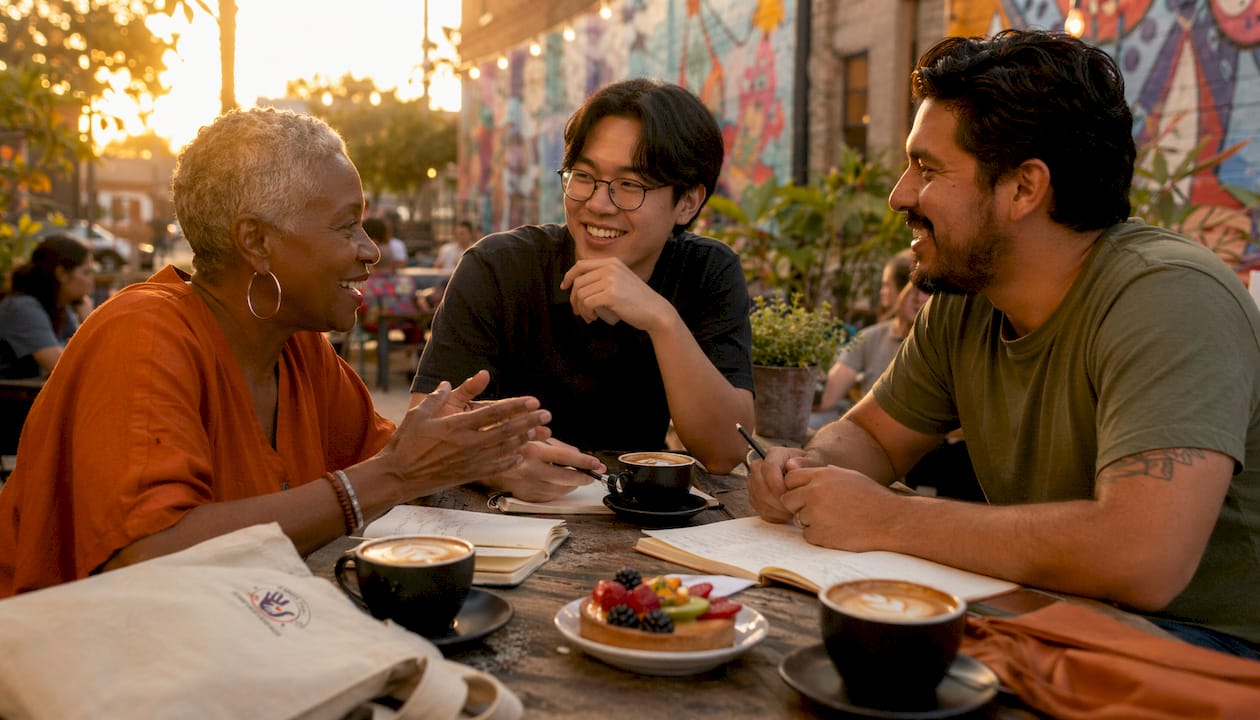
Beyond the café, coffee fundraising gives community organizations a practical tool for raising money. Coffee fundraisers can earn 40% profit on catalog sales with no upfront costs, making them accessible for schools, youth groups, churches, and nonprofits of all sizes. Custom-labeled bags put the organization’s identity front and center, turning every sale into a conversation about the cause.
Business-community connections in the coffee world include:
- Local coffee shops serving as informal community hubs
- Corporate giving programs from brands like Think Coffee and Community Coffee
- Purpose-driven product lines funding specific social causes
- Coffee fundraising programs for schools, sports teams, and nonprofits
- Online sales extending fundraiser reach to out-of-town supporters
How coffee creates economic independence in marginalized communities
The most powerful thing coffee does for marginalized communities is give people a path to ownership. Meridah Nandudu’s story is a clear example: she went from unemployed single mother to award-winning exporter, and she brought hundreds of women with her. The Duromina cooperative in Ethiopia’s Jimma region followed a similar arc, using profits from premium coffee sales to build roads, schools, and a health center for a community that had once felt “isolated and forgotten.”
Pro Tip: Small organizations looking to maximize their coffee fundraising profits should consider a presale or wholesale model, buying custom-labeled coffee in bulk and selling directly on-site, rather than relying solely on catalog sales. Acting as your own micro-retailer keeps more margin in your hands and builds a stronger connection between your mission and your supporters.
Women’s empowerment through coffee is one of the most documented outcomes in the sector. Programs in Uganda have enabled over 600 women farmers to sell coffee directly, with financial independence reducing domestic violence and inspiring neighbors to start their own small businesses. The Flaming Bean’s Safe Ground blend reflects that same commitment on the consumer side, directing proceeds to organizations that protect vulnerable people and strengthen communities.
Every cup you choose carries a story. Make it one worth telling.
Key Takeaways
Coffee supports communities across economic, social, and environmental dimensions, with programs like Fair Trade generating $31 million in Community Development Funds in 2021 and direct-selling initiatives enabling over 600 women farmers to gain financial independence.
| Point | Details |
|---|---|
| Economic reach | Around 25 million families globally depend on coffee farming for their primary income. |
| Fair Trade impact | Fair Trade partners generated $31 million in Community Development Funds in 2021. |
| Women’s empowerment | Programs in Uganda enabled over 600 women farmers to sell coffee directly and earn independently. |
| Fundraising potential | Coffee catalog fundraisers can earn 40% profit with no upfront costs for schools and nonprofits. |
| Purpose-driven brands | The Flaming Bean’s Safe Ground and Mission Fuel blends direct proceeds to community protection causes. |
Comments