
Types of Community Coffee Brands: A Flavor Guide

Community coffee brands are defined as coffee businesses that combine ethical sourcing, local engagement, and social impact as core parts of their identity. These brands go well beyond selling a good cup. They build cooperatives, fund social programs, and partner with artists, nonprofits, and neighborhoods to create something bigger than coffee. If you’re researching types of community coffee brands to find unique flavors and meaningful causes to support, this guide breaks down every major model, from farmer cooperatives to pay-what-you-can cafes, so you can make choices that match your values and your palate.
1. Types of community coffee brands: an overview
Community coffee brands fall into four main categories: cooperative brands, donation-based models, collaborative lifestyle brands, and multi-purpose community hubs. Each type approaches ethical sourcing and local impact differently. Understanding these categories helps you choose coffee that fits both your flavor preferences and the causes you care about. The Flaming Bean, for example, operates as a purpose-driven brand that weaves community support directly into its product line.
2. Cooperative coffee brands: empowering farmers and unique flavors
Cooperative coffee brands are built around farmer-owned membership structures where growers pool resources, share infrastructure, and sell collectively. Kenyan coffee cooperatives operate through washing stations that handle processing and sales, producing traceable, celebrated coffees tied to specific regions. That traceability is a direct benefit to you as a coffee enthusiast. When you buy cooperative coffee, you can often trace your cup to a single washing station or village.
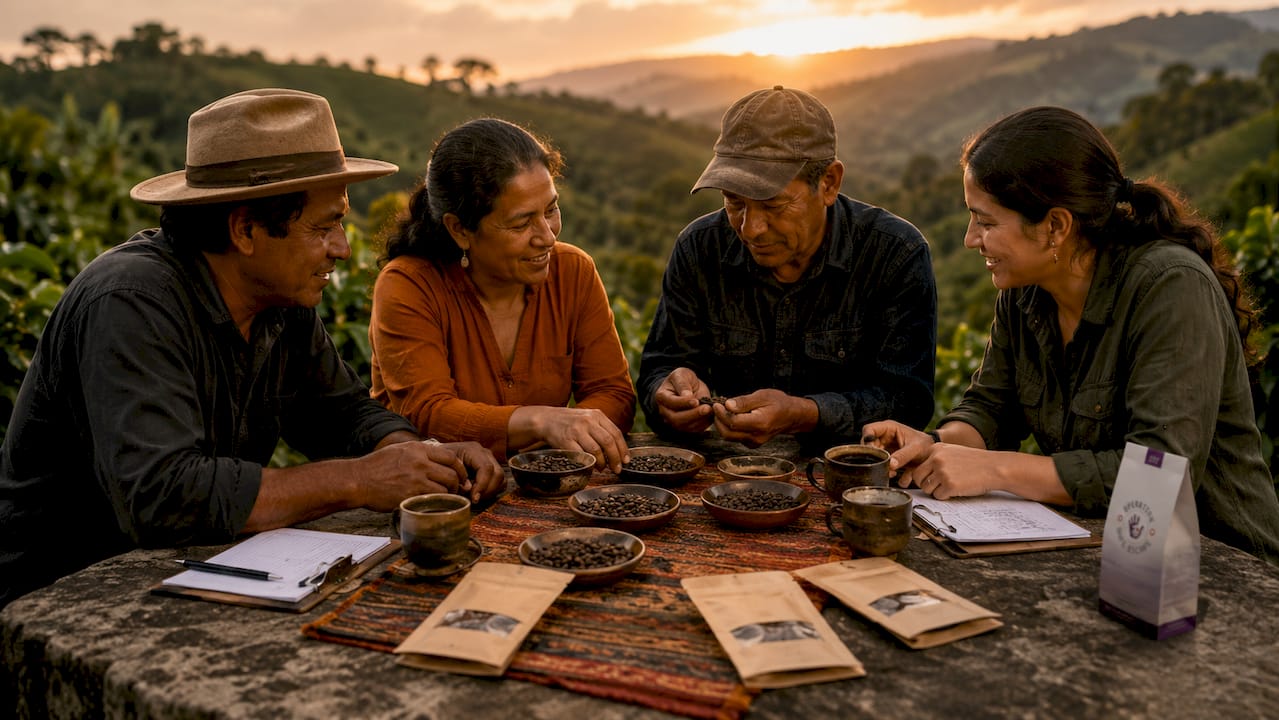
The flavor payoff is real. Cooperative structures give farmers access to better processing equipment, which improves consistency and brings out the natural character of each bean. Ethiopian cooperatives, for instance, produce naturally processed coffees with intense fruit and floral notes that would be impossible without shared drying infrastructure.
Cooperative success is not guaranteed, though. Cooperatives with direct export capability typically yield higher returns than those relying on intermediaries. Governance quality and economic model matter as much as the cooperative label itself.
- Traceability: Cooperative coffees are often traceable to a specific washing station or farm group.
- Flavor diversity: Regional processing methods create distinct flavor profiles unavailable in commodity coffee.
- Farmer income: Collective bargaining and shared infrastructure typically improve farmer earnings.
- Quality control: Cooperatives provide certifications and standards that benefit both farmers and buyers.
Pro Tip: When buying cooperative coffee, look for the washing station name on the bag. That detail signals genuine traceability, not just a marketing claim.
3. Donation-based and pay-what-you-can coffee models
Donation-based coffee models prioritize community access over profit margins. These venues set no fixed price, relying instead on voluntary contributions and community goodwill to cover costs. Java w/ Jesus opened in 2026 as a pay-what-you-can coffee venue focused on creating space for prayer and community conversation. That model removes the financial barrier that keeps many people out of traditional coffee shops.
The operational difference from a standard cafe is significant. A conventional retail coffee brand prices for margin. A donation-based model prices for access, which means the community itself becomes the funding mechanism.
“Coffee’s role as a social leveler makes entrance to support programs less daunting. Community organizers consistently find that a cup of coffee lowers the barrier to asking for help, joining a group, or simply showing up.”
These models face real sustainability challenges. Free programming requires revenue beyond what voluntary donations reliably provide. Many pay-what-you-can cafes supplement income through merchandise, events, or partnerships with local nonprofits. The ones that survive long-term build hybrid revenue streams rather than depending on a single source.
- Low barrier to entry: No fixed price removes financial exclusion.
- Social programming: Many host free workshops, prayer groups, or counseling sessions.
- Volunteer-dependent: Staff and operations often rely heavily on community volunteers.
- Funding risk: Shifts in donor support can end programs quickly, as seen with the Medicine Hat Public Library’s Community Coffee program in 2026.
4. Collaborative community coffee brands: partnerships beyond coffee
Collaborative community coffee brands build their identity through partnerships with artists, designers, fashion labels, and local cultural organizations. These cross-industry relationships help coffee brands reach new audiences and create cultural moments that a bag of beans alone never could. La Marzocco’s collaborations during Milan Design Week show how coffee can anchor broader cultural activations involving design and lifestyle.
The key distinction here is authenticity. Inauthentic coffee brand partnerships are quickly spotted by consumers. Genuine collaborations bring real cultural and community value. Performative ones damage trust. Coffee enthusiasts are a discerning audience. They notice when a collab is a cash grab versus a real creative exchange.
Here is what makes collaborative community coffee brands work:
- Shared values: The partner brand and the coffee brand must serve overlapping communities.
- Co-created products: Limited edition blends, packaging, or events that neither brand could produce alone.
- Cultural programming: Pop-ups, gallery shows, or workshops that bring people together around coffee and the partner’s craft.
- Mutual reach: Each brand introduces the other to a new audience without diluting either identity.
- Long-term relationships: One-off collabs rarely build community. Ongoing partnerships do.
Pro Tip: If you want to support a collaborative coffee brand, look for limited edition releases tied to local artists or events. Those products directly fund the creative community around the brand.
Understanding co-branding in coffee helps you spot which partnerships are genuine and which are purely promotional. The Flaming Bean’s approach to community-driven roasting reflects this same principle. Every blend tells a story connected to a real cause or community.
5. Multi-purpose community coffee hubs: more than just coffee
Multi-purpose community coffee hubs operate as social infrastructure. They sell coffee, but that revenue funds grocery distribution, senior programming, job training, and other services that a neighborhood actually needs. South LA Cafe distributes 200 bags of groceries weekly and expanded to five locations by 2025. That scale of impact comes directly from treating coffee as a funding mechanism, not just a product.
These hubs use hybrid revenue models to stay sustainable. South LA Cafe depends on coffee sales, donations, and volunteer support to operate free grocery giveaways. No single revenue stream is enough on its own. That model requires constant community investment, both financial and human.
| Service Type | Example | Community Benefit |
|---|---|---|
| Grocery distribution | South LA Cafe | Addresses food insecurity in underserved neighborhoods |
| Senior programming | Community coffee clubs | Reduces social isolation among older adults |
| Job skills training | Library-based coffee programs | Builds employability and professional confidence |
| Prayer and counseling space | Pay-what-you-can cafes | Provides low-barrier mental health and spiritual support |
The greatest impact of community coffee initiatives often lies in developing social and professional skills alongside coffee sharing. Coffee is the entry point. The real product is connection and capability.
- Multi-purpose hubs require volunteer networks to scale services beyond what revenue alone supports.
- Location matters: these hubs work best in neighborhoods with limited access to social services.
- Community trust takes years to build and can collapse quickly if funding disappears.
6. Choosing the right community coffee brand for your values
The right community coffee brand depends on what you want your purchase to do. If flavor traceability and farmer income matter most, cooperative brands deliver both. If you want your coffee dollar to fund local social programs, a multi-purpose hub or purpose-driven brand like The Flaming Bean is the better fit.
Coffee brings people together in ways that few other products can. That social power is exactly what the best community coffee brands build on. The Flaming Bean’s Safe Ground blend supports organizations protecting vulnerable individuals, while the Evening Roast offers a smooth, ethically sourced option for everyday drinking.
| Brand Type | Best For | Flavor Focus | Community Impact |
|---|---|---|---|
| Cooperative | Traceability and farmer support | Regional, single-origin profiles | Farmer income and quality control |
| Donation-based | Low-barrier access and social connection | Variable, often locally sourced | Social programming and inclusion |
| Collaborative | Cultural engagement and limited editions | Creative, story-driven blends | Arts, design, and lifestyle communities |
| Multi-purpose hub | Broad social impact and neighborhood service | Approachable, community-friendly | Food security, skills, and senior care |
| Purpose-driven brand | Cause support and ethical sourcing | Curated, mission-matched roasts | Nonprofit and advocacy organizations |
Key takeaways
The most effective community coffee brands combine ethical sourcing, genuine local partnerships, and hybrid revenue models to create lasting social impact alongside exceptional flavor.
| Point | Details |
|---|---|
| Cooperatives deliver traceability | Farmer-owned structures produce traceable, regionally distinct coffees with better income for growers. |
| Donation models need hybrid funding | Pay-what-you-can cafes rely on donations, volunteers, and events to stay financially viable. |
| Authentic collabs build real community | Cross-industry partnerships only work when both brands share genuine values and audiences. |
| Multi-purpose hubs need volunteer networks | Coffee hubs offering social services depend on community investment beyond coffee sales alone. |
| Purpose-driven brands connect flavor to cause | Brands like The Flaming Bean link specific roasts to specific missions, making every purchase count. |
Why community coffee brands matter more than most people realize
I’ve spent years tasting coffees from every category in this guide, and the one thing that separates the brands worth supporting from the ones just using community language as marketing is specificity. Cooperative brands that name the washing station. Cafes that tell you exactly which nonprofit receives a portion of your purchase. Collaborations that produce something neither partner could make alone.
The neutral social space that coffee creates is genuinely underrated. Community organizers working with groups like Tada have noted that coffee lowers the barrier to asking for help or joining a group in ways that formal settings never do. That is not a soft benefit. It is a measurable reduction in social isolation.
What I find most encouraging is that the best community coffee brands are not choosing between great coffee and great impact. They are proving those two things reinforce each other. The Flaming Bean’s purpose-driven blends are a clear example. The mission gives the coffee meaning. The quality makes the mission sustainable. That combination is what I look for, and it is what you should look for too.
— Tony
The Flaming Bean’s community coffee lineup
The Flaming Bean builds every roast around a real story and a real cause. Whether you want a bold morning cup or a smooth evening wind-down, there is a blend that matches your moment and supports a mission you can stand behind.
The Safe Ground blend supports organizations protecting vulnerable individuals and advancing digital safety. The Evening Roast delivers rich, approachable flavor for those quieter moments. Every bag you buy funds something real. We also offer wholesale partnerships for businesses that want to bring community-focused coffee to their customers. Visit The Flaming Bean to find the blend that fits your values and your cup.
FAQ
What are the main types of community coffee brands?
The four main types are cooperative brands, donation-based cafes, collaborative lifestyle brands, and multi-purpose community hubs. Each model combines coffee sales with a distinct form of community engagement or social impact.
How do cooperative coffee brands benefit farmers?
Cooperative structures give farmers shared access to processing equipment, certifications, and direct export channels. Cooperatives with their own processing and export infrastructure typically yield higher returns than those relying on intermediaries.
What is a pay-what-you-can coffee model?
A pay-what-you-can model sets no fixed price, allowing customers to contribute what they can afford. These venues prioritize community access over profit and often host free social programming funded by voluntary donations and volunteer labor.
How do I know if a coffee brand collaboration is genuine?
Genuine collaborations produce co-created products or events that neither brand could deliver alone and serve overlapping communities. Superficial partnerships lack cultural value and are quickly identified by informed coffee enthusiasts.
Can community coffee brands also offer great flavor?
Cooperative and purpose-driven brands consistently produce high-quality, traceable coffees with distinct regional flavor profiles. Ethical sourcing and great flavor are not in conflict. The best community coffee brands prove both are achievable together.
Recommended
- Types of Coffee Bean Origins: A Flavor Guide – The Flaming Bean Roastery
- What Is a Coffee Blend? Your Complete Flavor Guide – The Flaming Bean Roastery
- Coffee Roast Levels Explained: Your Flavor Guide – The Flaming Bean Roastery
- Coffee Flavor Wheel Explained: Your Complete Tasting Guide – The Flaming Bean Roastery
Comments